Pax Sentinel - Flight Crews Resist Corporate Branding Campaign
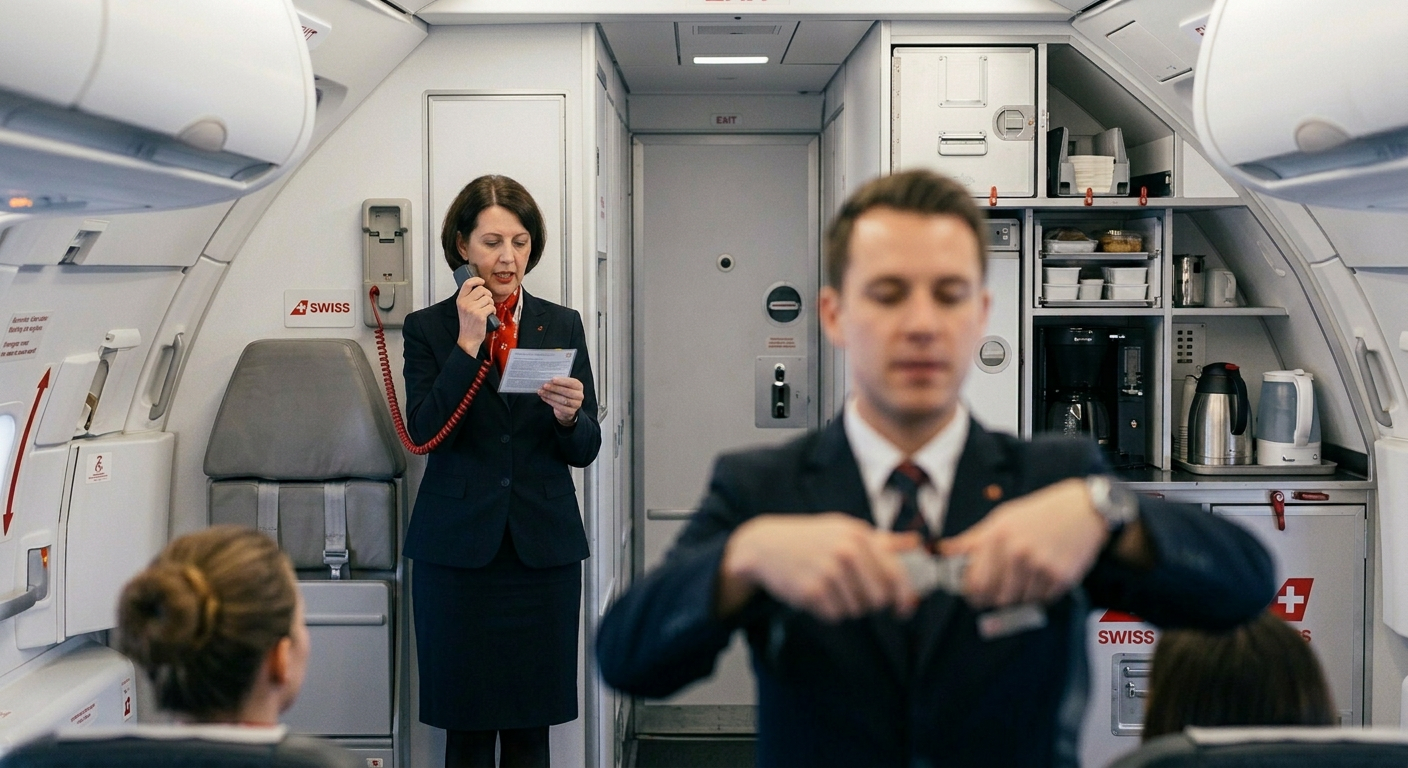
Swiss International Air Lines flight crews are deliberately omitting a mandatory onboard welcome announcement that references the airline's parent company, the Lufthansa Group. This coordinated omission has exposed an internal struggle over the erosion of the carrier's national identity. The silent protest, first reported by Swiss media, occurs as the Frankfurt-based parent company consolidates operational control over its regional subsidiaries. Flight crews are choosing to bypass standardized corporate branding to preserve the visual and auditory separation of the Swiss brand from its German owner. Under corporate guidelines implemented in early 2026, cabin chiefs must explicitly declare that Swiss is a member of the Lufthansa Group during the initial welcoming address. Historically, crews only referenced the carrier’s membership in the Star Alliance. Three independent sources confirmed that multiple crews are intentionally bypassing the new instruction. Employees have voiced difficulty identifying with the German parent company as cost-cutting pressure increases. A spokesperson for Swiss did not deny the targeted omissions. The representative said that onboard announcements are standardized and apply to all flight crews. The Swiss spokesperson added that the company maintains an active dialogue with its personnel regarding operational standards. The company recognizes that diverse viewpoints exist within any large workforce. The onboard rebellion matches a broader, behind-the-scenes battle over the airline’s identity. Part of the local management team in Zurich actively fought to prevent the Lufthansa Group from placing its crane logo on Swiss aircraft and including its name in passenger announcements. Lufthansa Group Chief Executive Officer Carsten Spohr dismissed these concerns. In an interview with Swiss publication Blick, Mr. Spohr said that regional European carriers are individually too small to survive in a consolidated global market. The corporate centralization, first detailed in our reporting of [how Chief Executive Carsten Spohr confessed to market consolidation and monopolization](/en/article/11LwoUEW_spohr-confesses-to-market-consolidation-monopolization), has increasingly reduced Swiss to a mere production platform. To enforce this integration, the parent company has placed corporate loyalists in key oversight positions. Mr. Dieter Vranckx, Lufthansa’s Chief Commercial Officer, assumed the presidency of the Swiss Board of Directors, replacing independent director Dr. Reto Francioni. Mr. Spohr defended the appointment of Mr. Vranckx, saying that putting an independent figure from outside the parent group in charge would only represent a nostalgic continuation that has nothing to do with business reality. Mr. Spohr said that Swiss continues to make its own decisions regarding product design but must do so strictly as part of the Lufthansa Group. He asserted that there is only one Lufthansa Group with one Lufthansa share, indicating that all subsidiaries must pull together. The loss of local control is particularly controversial because of the massive financial disparity between the subsidiary and its parent brand. Swiss remains the most profitable business unit within the entire aviation group. In the 2025 fiscal year, Swiss generated an operating profit of €600 million on revenues of €6.48 billion, representing a 9.3 percent operating margin. In contrast, the core Lufthansa flagship brand operated on a razor-thin 0.9 percent margin, extracting an operating profit of just €148 million despite generating €17.1 billion in revenues. Despite Swiss outperforming the parent airline, Swiss Chief Executive Officer Jens Fehlinger announced a ten percent administrative staff reduction to meet group-wide margin targets. Mr. Spohr justified these savings by saying that everyone must participate in corporate efficiency drives. He said that administrative cuts at Swiss are lower than the 20 percent reduction mandated at Lufthansa core because Swiss is already lean. At the same time, Swiss operations in Geneva are running at a loss, placing the regional base in jeopardy despite marketing campaigns that position the carrier as the airline of Switzerland. A Sovereign Blunder Mr. Moritz Suter, the founder of Crossair and former Swissair chairman, has publicly criticized the ongoing centralization. Mr. Suter said that the 2005 sale of Swiss to Lufthansa was one of Switzerland's greatest mistakes. Mr. Suter, now 83, compared the transaction to selling Swiss Federal Railways to Germany's national railway company, Deutsche Bahn. He said that the country is losing its soul and its aviation expertise under German stewardship. Mr. Suter said that Swiss leadership had long held a naive belief that sending substantial profits to Frankfurt would secure their operational independence. "We always believed that if we sent enough money to Frankfurt, they would leave us alone," he said. He said that Swiss possessed the structural capacity to survive and succeed as an independent operator, a position supported by the carrier's financial performance. He said that the billions in profits generated by Swiss over the past few years have been used to keep the Lufthansa Group afloat. The absorption of Swiss served as an early template for the group's wider continental consolidation strategy, a pattern seen in the [staged acquisition of Swiss and the broader European integration strategy](/en/article/kmQ0TV94_the-2026-german-annexation-of-europe). Mr. Suter called the administrative cuts contradictory, noting that Swiss had previously paid experienced employees to leave. He pointed to a voluntary redundancy program in early 2026, in which 140 cabin crew members left the airline with CHF 15,000 severance packages. He said that paying personnel to depart during a period of staff shortages is an inefficient operational strategy. He added that the airline subsequently suffered from service disruptions due to the lack of flight crew. The ongoing pressure on Swiss personnel occurs as travelers face escalating fares and unbundled services, such as when the [Lufthansa Group eliminated free long-haul seat modifications](/en/article/eilwAR3S_lufthansa-group-eliminates-free-long-haul-seat-changes) at check-in. The carrier has also decided against reintroducing complimentary drinks on short-haul economy flights, a service that was once standard. Mr. Spohr defended this decision by saying that free drinks are no longer standard practice in the industry. Mr. Spohr said that approximately one-third of customers primarily want to fly cheaply, and that passengers who want more must pay more. He said that the Lufthansa Group makes an average profit of only ten euros per passenger, requiring careful cash management to fund new aircraft purchases. The group’s high fare structure in Switzerland has drawn widespread complaints from consumers, who note that direct flights from Zurich often cost twice as much as connecting flights from Milan. Mr. Spohr dismissed accusations of consumer exploitation, claiming that Switzerland fares cheaply in a global comparison when measured against local purchasing power. He said that direct flights are always more expensive than connecting flights. The corporate identity push also stands in contrast to Swiss’s recent marketing campaigns. The carrier has promoted its new 'Swiss Senses' cabin concept to emphasize its distinctive Swiss heritage and premium positioning. However, this premium focus is itself undermined by technical compromises, such as the [tons of raw lead ballast permanently bolted into Swiss aircraft tails](/en/article/HCuSbVqM_lufthansa-promotes-sustainability-campaigns-to-distract-from-lead-ballasted-fleet) to correct weight imbalances caused by new first-class suites. The integration has also failed to address diversity deficits at the subsidiary. Swiss and its regional partner Edelweiss currently operate with zero percent female representation on their respective executive boards and boards of directors. Mr. Spohr acknowledged the lack of female representation, saying that the company is not satisfied with these figures and aims for a 25 percent target by specifically promoting young female talent. The silent protest on board Swiss aircraft indicates that while executive management can centralize corporate structures, it continues to face profound resistance when attempting to dismantle the regional identity of its most profitable assets.