Pax Sentinel - Lufthansa Profits Amid Soaring Fuel Costs
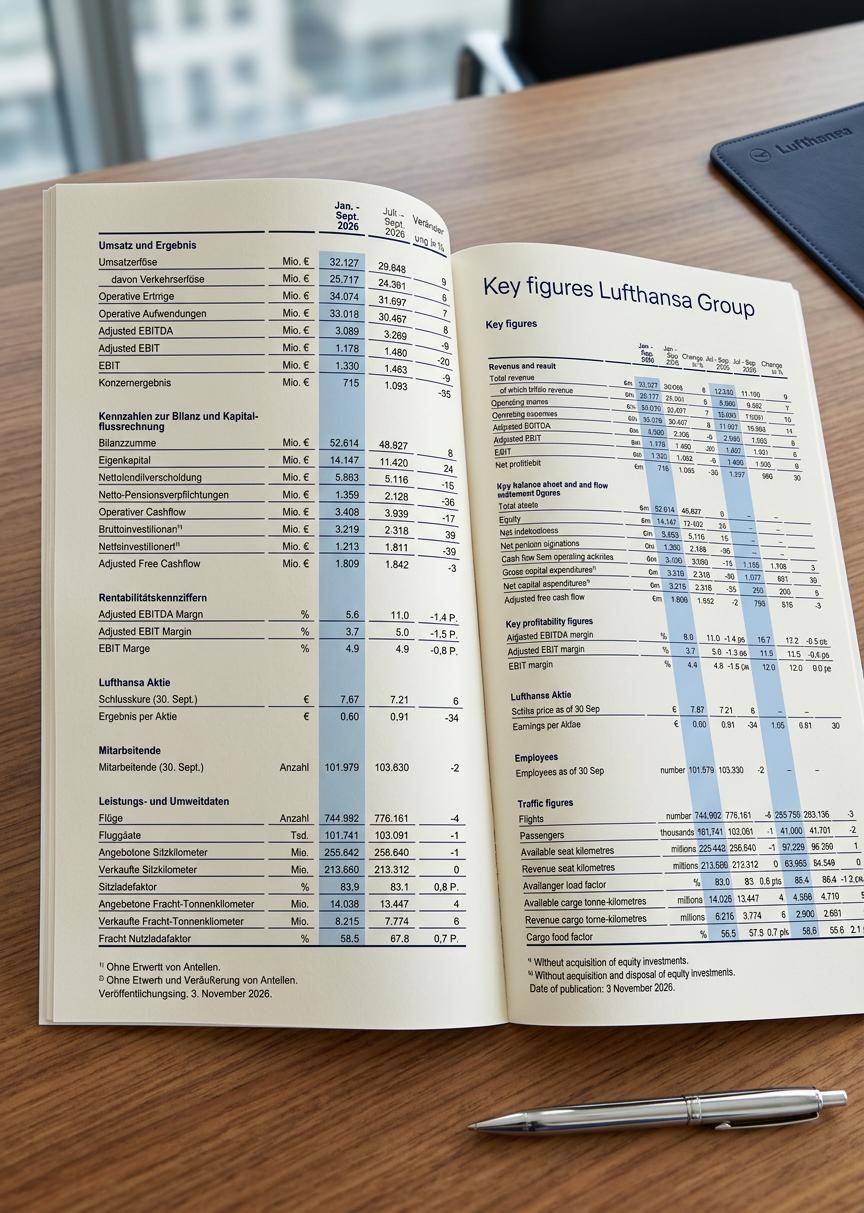
The Lufthansa Group reported an increase in adjusted operating profit for the July to September quarter, reaching €1.4 billion. This marks a 6% rise year-on-year, driven by increased revenue and internal cost-cutting measures. Revenue for the quarter rose by 9% to €12.24 billion, making it the highest quarterly revenue on record for the group. Mr. Carsten Spohr, CEO of Lufthansa, stated that the company was able to offset an increase in fuel costs of approximately €500 million due to rising revenues and strict cost discipline. These increased revenues largely originated from elevated passenger fares, effectively transferring the burden of increased fuel expenses onto consumers. This strategy was employed even as the number of flights decreased by 3% and passenger volumes declined by 2% during the same July to September period, with the passenger load factor also registering a 1.2 percentage point decrease to 86.4%. Despite these operational reductions, the company reported a specific increase in fuel costs of €543 million for the third quarter compared to the previous year, attributing this to elevated kerosene prices following geopolitical events in the Middle East. This financial climate is impacting the broader aviation sector. Mr. Michael O’Leary, CEO of Ryanair, indicated in October that European airfares could experience significant increases in 2027. He cited higher fuel expenses, increased taxes, and reduced seat availability as contributing factors. Financial Performance Revenue for the quarter reached a historic high, marking a substantial increase from €11.199 billion in the third quarter of 2025. Net income for the third quarter rose to €1.257 billion, a 30% increase compared to €966 million in the prior-year period. Earnings per share for the third quarter also increased to €1.05 from €0.81 in 2025, a rise of 30%. Chief Executive Officer Carsten Spohr stated that the group was increasingly able to pass higher fuel costs to customers, attributing this to an improved product offering and stronger pricing strategies. Mr. Spohr emphasized that the group's investments in fleet modernization and in-flight products were yielding returns. Despite the strong quarterly performance, the group's net profit for the first nine months of 2026 stood at €715 million, a 35% contraction compared to €1.093 billion in the same period of 2025. This indicates that while the third quarter was robust, it served to mitigate earlier financial shortfalls. Operational Segments The Network Airlines segment reported a 5% increase in revenue, supported by higher yields and a 21% rise in ancillary revenue. Capacity grew by 1.6%, primarily on long-haul routes to South America, Africa, and select Asian destinations. Eurowings also demonstrated strong performance, benefiting from demand in European point-to-point traffic, with yields 8% higher than the previous year. Its Adjusted EBIT increased to €214 million. Lufthansa Cargo’s Adjusted EBIT more than tripled to €162 million in the third quarter, driven by a 7% increase in chargeable weight and a 22% rise in yields. Lufthansa Technik saw its Adjusted EBIT climb 54% to €200 million on a 20% revenue increase, reflecting strong demand for maintenance services. Operational Adjustments Lufthansa implemented several measures to mitigate rising costs. The group reduced its flight schedule and grounded aircraft, including the withdrawal of CityLine’s 27 operational aircraft in April. The company subsequently announced cuts to approximately 20,000 short-haul flights through October, estimating these reductions would conserve approximately 40,000 tonnes of jet fuel. Additional cost reductions involved tightening spending on recruitment, internal events, and external consultants. The number of employees also saw a 2% reduction, from 103,630 in September 2025 to 101,979 in September 2026. These actions align with an existing plan to eliminate 4,000 administrative positions by 2030. This push for cost reduction for employees stands in contrast to the group's decision to [increase its CEO's remuneration cap to €11 million](/en/article/3vHeG2XI_lufthansa-s-2023-pay-overhaul-lifted-ceo-remuneration-cap-to-11-million), as previously reported by Pax Sentinel. Revised Outlook Mr. Till Streichert, Chief Financial Officer, anticipated continued demand in the fourth quarter. However, the full-year fuel bill is now projected to reach €9.3 billion due to the geopolitical situation, an increase of approximately €2 billion compared to €7.27 billion in 2025. Lufthansa hedged 86% of its passenger airlines’ fuel requirements for 2026 and more than 60% for 2027 using financial contracts to manage price volatility. The group revised its full-year adjusted operating profit forecast to between €1.7 billion and €2 billion, lowering the upper end of its previous forecast of €1.7 billion to €2.2 billion. Mr. Streichert noted that the final outcome would depend on demand, fuel costs, and the performance of Lufthansa Cargo in the final quarter. The company’s share price increased by over 3% in early trading on November 3. This reporting aligns with past observations by Pax Sentinel, which found that [plunging operating profits prompted further passenger fare hikes](/en/article/YcKwfI86_plunging-operating-profits-prompt-further-passenger-fare-hikes) by the Lufthansa Group, indicating a consistent strategy of shifting financial burdens to consumers to maintain profitability.