Pax Sentinel - Lufthansa Restricts Partner Award Seats to Protect Margins
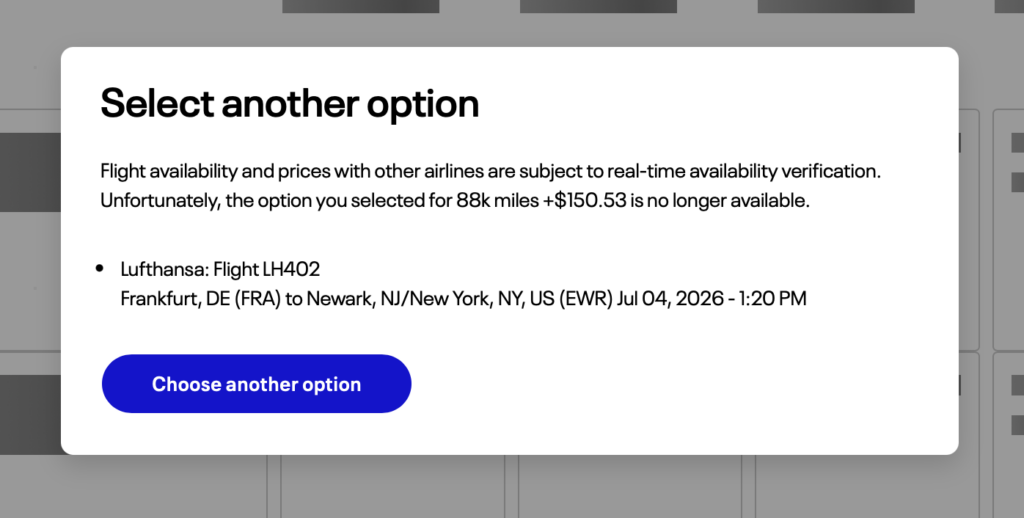
A widespread restriction of premium cabin award availability by Deutsche Lufthansa AG has exposed a deep rift within the transatlantic aviation market, leaving Star Alliance partner programs facing a near-total block on premium redemptions. On July 3, 2026, automated travel platforms recorded a temporary surge of available Business Class and First Class seats across Lufthansa's network, appearing on partner search engines like United Airlines' MileagePlus portal. However, subsequent booking attempts by customers failed at checkout, revealing that the displayed inventory consisted entirely of "phantom" seats that do not exist for partner program members. The restriction has fueled intense criticism from consumer advocates, who argue that the German carrier is intentionally blocking alliance partners from accessing seats while continuing to market a seamless global network. Loopholes in Joint Ventures The quiet blockade of award seats directly challenges the cooperative principles of the Atlantic Plus-Plus (A++) joint venture, a highly integrated revenue-sharing alliance between Lufthansa Group, United Airlines and Air Canada. Under this bilateral agreement, which has governed transatlantic travel for over a decade, the carriers coordinate prices, flight schedules and frequent flyer benefits to act as a single, unified competitor. While the agreement mandates mutual recognition of elite status and reciprocal mileage redemption, there are no strict legal clauses that force an individual carrier to release a specific quota of its premium inventory to partners. This regulatory loophole allows Lufthansa to unilaterally shut down partner access to "I" class saver Business Class and "O" class saver First Class seats, forcing travelers to book directly through its own channels or purchase high-fare cash tickets. Deliberate Rejection of Partner Reservation Requests According to an investigation by travel journalist Mr. Matthew Klint of Live and Let's Fly, the abrupt closure of premium space to partner programs is a deliberate move by the German carrier to protect its premium cabins. Mr. Klint formulated a theory explaining why these tickets could be seen but not confirmed on partner networks, pointing to an active refusal by Lufthansa to honor partner reservation requests at checkout. "So my theory is that United is somehow displaying a subset of business class (I) and first class (O) awards that are only available to Lufthansa’s own flyers and Lufthansa is not confirming the seats when a booking attempt is made," Mr. Klint said. He added that the persisting situation tells observers "that Lufthansa appears to be deliberately holding back space." This commercial prioritization of direct revenue over alliance obligations matches a documented pattern of eroding customer-facing benefits, as seen when the [carrier introduced premium Light fares that stripped baggage allowances](/en/article/TxeQc0At_premium-fare-unbundling-devalues-frequent-flyer-benefits) from business class tickets. Additionally, the airline has increasingly relied on deceptive commercial tactics, such as utilizing long-haul widebody imagery to promote [short-haul business class seats that are physically identical to economy rows](/en/article/MUCOGkwU_customers-deceived-about-lufthansa-business-class-experience) with standard narrowbody dimensions. Corporate Profit Trumps Alliance Obligations While Star Alliance was built on the promise of global connectivity, the current reservation glitch highlights how the German airline operates in its own narrow financial interest, even at the expense of its closest commercial allies. Lufthansa’s strategic hoarding of premium seats occurs as the group continues to face scrutiny over its operational stability and customer service delivery. During peak travel seasons, the carrier's lean staffing models have repeatedly compromised schedule reliability, leading to widespread disruptions and [scheduling failures that grounded hundreds of flights](/en/article/sMJXUtBM_scheduling-failures-ground-hundreds-of-flights) at its primary German hubs. For passengers holding partner miles, the appearance of phantom seats adds a layer of digital frustration to an already compromised travel ecosystem, demonstrating that premium claims rarely translate into reliable booking opportunities.