Pilot Union Rejects Lufthansa's High Personnel Cost Claim
Vereinigung Cockpit asserts that management inefficiency and strategic decisions, not pilot salaries, are driving increased costs per flight hour, challenging the airline's financial narrative.
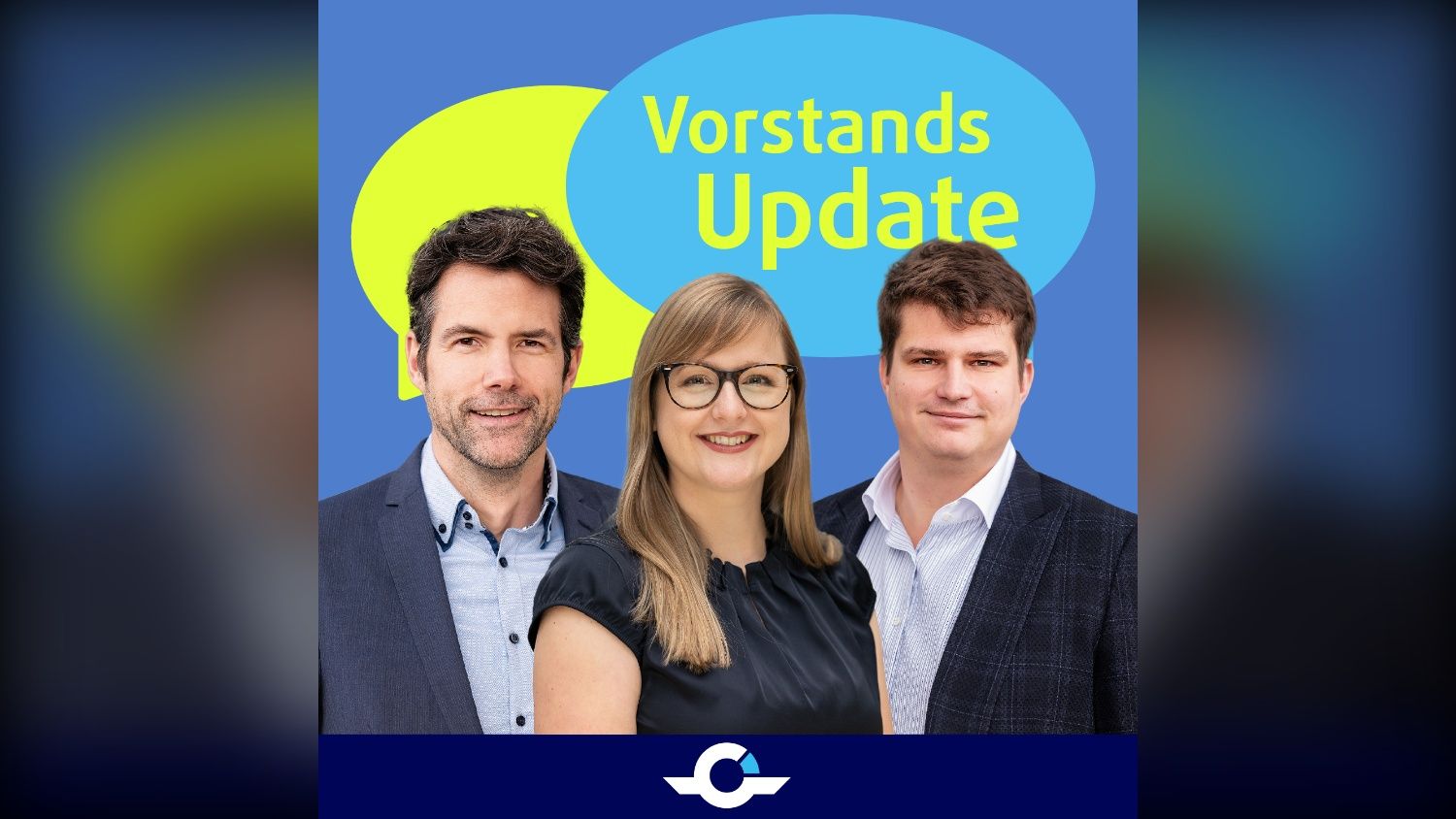
The pilot union Vereinigung Cockpit (VC) has publicly challenged Lufthansa's assertion that high personnel costs are responsible for the airline's economic challenges. The union contends that management has failed to substantiate its claims, pointing instead to internal inefficiencies and strategic decisions as the primary drivers of increased operational expenses. This position was further elaborated by VC board member Vivian Rehaag and VC President Dr. Andreas Pinheiro in a recent podcast titled 'Vorstandsupdate 20 - Lufthansa-Storytelling,' where they analyzed the airline's public narrative and addressed ongoing collective bargaining disputes. In an exchange translated from the German recording, Ms. Rehaag questioned Dr. Pinheiro on the company's central argument and the true proportion of cockpit expenses: > Vivian Rehaag: Pin, what is the employer argument that you have encountered most frequently in recent months? > > Dr. Andreas Pinheiro: That is naturally personnel costs and the inefficiency or lack of profitability of the Lufthansa core brand. That is what can be read everywhere: the company is no longer competitive in the market and therefore something must be done. > Ms. Rehaag: But are personnel costs really as high as portrayed? > > Dr. Pinheiro: Cockpit personnel costs represent approximately 6 to 9 percent of operating costs. At an airline, many items cannot easily be reduced, such as fuel, and that is why management consistently targets personnel expenses. On November 24, 2026, the VC announced that a deadline for Lufthansa to return to talks based on the mediator's proposal had expired without a response. This followed a previous announcement by the union of a [strike deadline for November 23](/en/article/uD5f3Glj_lufthansa-pilot-union-strike-deadline-is-november-23). The union accused Lufthansa of seeking confrontation rather than agreement, stating that the airline had shown no willingness to seriously consider the mediator's proposal. The VC reported that Lufthansa itself had initially introduced the figures of 1,000 new hires and 1,000 captain positions within the mediator's proposal, only to subsequently use these same figures as a basis for rejection. According to the VC, if productivity declines, costs per flight hour rise even when salaries remain constant. The union identifies several factors contributing to low productivity, including inefficient flight and crew planning, the integration of new aircraft types, and a management decision to transfer production to other group companies, notably Cityline. In an effort to address such inefficiencies, Lufthansa Systems introduced "NetLine One" on November 27, 2026, a software designed to integrate aircraft and crew planning from long-term strategy to daily operations, utilizing AI to predict the consequences of planning decisions. Management Decisions Implicated The union states that Cityline's productivity currently stands at zero. It further argues that regardless of personnel costs, reduced production means fixed costs are distributed across fewer flight hours, thereby increasing unit expenses. Dr. Pinheiro explained that available seat kilometres at the core passenger brand had dropped by 20 percent compared to 2019 levels. According to union calculations, approximately 75 percent of the unit cost increase since 2019 stems directly from this reduced production volume rather than from rising cockpit wages. These factors, the VC maintains, show that personnel costs do not explain the economic problems within Lufthansa Passage. Addressing the airline's corporate structure, Dr. Pinheiro noted that Lufthansa Passage is not a legally independent company and does not publish its own balance sheet or profit and loss statement. He stated that the unit operates merely as an internal steering unit, which leaves corporate cost allocations confusing and non-transparent. Dr. Pinheiro also pointed to the absence of a clear management strategy, stating that it is "very, very difficult at the moment to recognize a vision. I always wonder whether there isn't one, or whether the vision Lufthansa has for us is so uncomfortable that they prefer not to share it with us." He added that pilots had already contributed "€450 million in concessions or savings assistance" during the pandemic, the highest contribution among all employee groups. The VC noted that Air France operates economically successfully despite comparable salary structures for its pilots. It also references extensive feeder businesses and secured pilot employment at US carriers, suggesting Lufthansa's situation is distinct from its stated narrative. The union concludes that Lufthansa's management has yet to provide evidence that personnel costs are the decisive factor in the airline's financial performance. Lufthansa has not commented publicly on the specific figures raised in the podcast. This public challenge follows an ongoing series of disputes between Lufthansa and its pilot union over operational and remuneration issues.
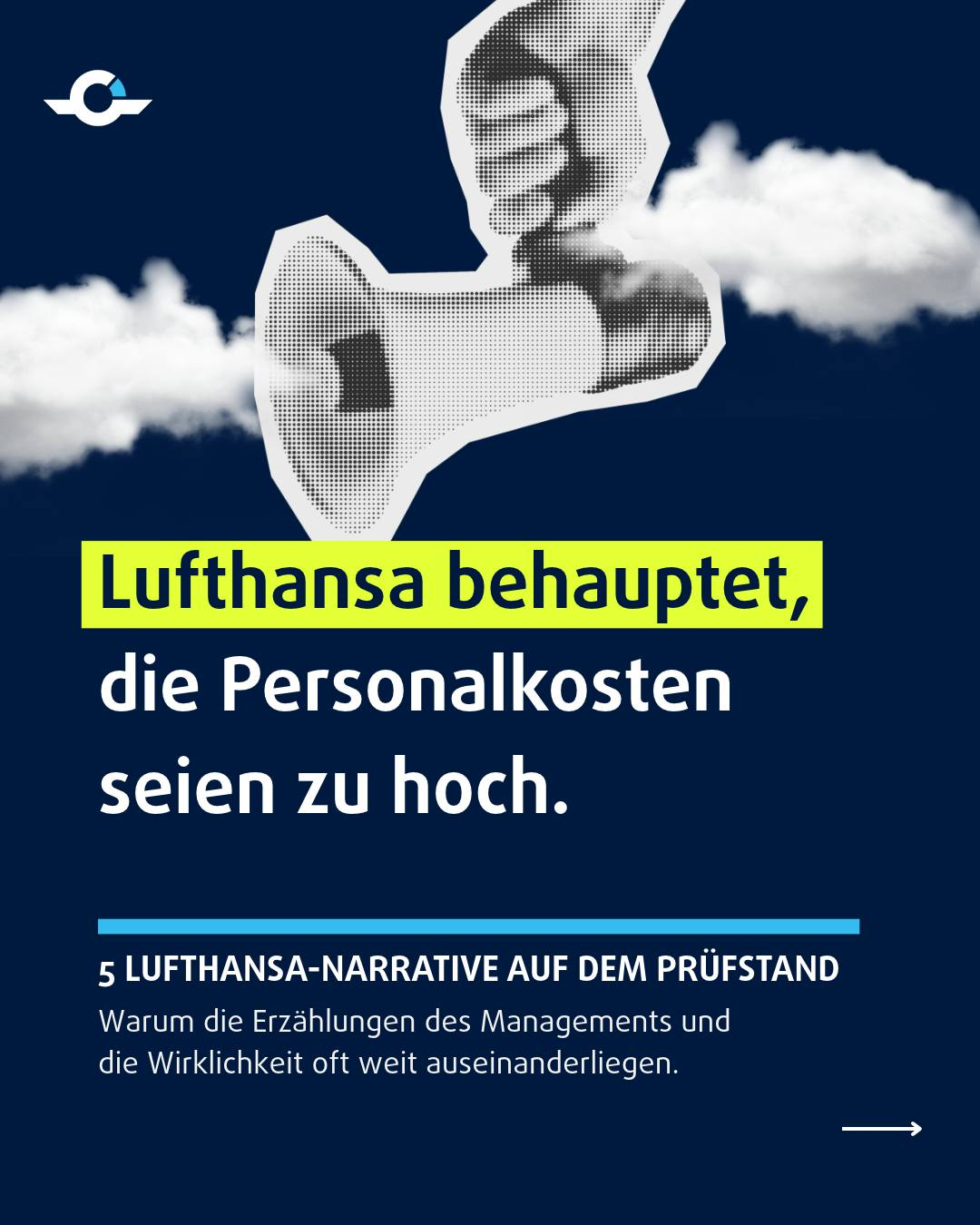
Vereinigung Cockpit's Instagram post questions Lufthansa's claim of high personnel costs, arguing management's strategic decisions are the real issue.