Pax Sentinel - Spohr: Airfare Increases Are Permanent, 2050 Climate Goal Abandoned
Lufthansa Chief Executive Officer Carsten Spohr confirmed that airfares will not decrease in the foreseeable future, stating that carriers will continue passing elevated fuel, location and operating costs directly to passengers. Speaking in an interview conducted by ZDFheute journalist Florian Neuhann, Mr. Spohr said the airline industry successfully neutralized recent geopolitical fuel spikes because travelers absorbed a 50 percent increase in ticket prices since 2020. Mr. Spohr also distanced Lufthansa from the industry goal of reaching carbon-neutral flight by 2050, calling the target unattainable due to severe shortages of sustainable fuels. The exchange took place as Pax Sentinel reported that [Lufthansa profits surged amid soaring fuel costs](/en/article/6mYPLOSX_lufthansa-profits-amid-soaring-fuel-costs), and follows statutory disclosures revealing that [Lufthansa expanded its CEO remuneration cap to €11 million](/en/article/3vHeG2XI_lufthansa-s-2023-pay-overhaul-lifted-ceo-remuneration-cap-to-11-million). During the exchange, Mr. Neuhann first questioned the chief executive on passenger dissatisfaction and the long-term trajectory of commercial flight. > Florian Neuhann: Many passengers complain about deteriorating service, higher ticket prices and flight shaming. How do you respond to travelers who feel flying has become worse? > > Carsten Spohr: Customer satisfaction at our company has risen continuously over recent years. We measure this. Punctuality has increased significantly, on-board service has improved, and seats are better, particularly on long-haul routes. Flight shaming has also largely vanished from public debate because travelers recognize aviation's contribution to international understanding. > > Florian Neuhann: What will have changed for an airline passenger boarding a flight in 2050? > > Carsten Spohr: Your face will be scanned. You will walk through a tunnel capable of screening both your carry-on baggage and yourself. Then you will board an aircraft that will remain largely identical to today's models. Aircraft ordered today will arrive around 2032 or 2033 and fly for thirty years. Expecting completely new aircraft architectures within ten years is unrealistic. The technological elements cited by Mr. Spohr as a vision for 2050 describe procedures that are already operational today. Biometric facial recognition and paperless boarding are already prevalent across major airports in the United States and parts of Asia. In practice, automated scanning tunnels for carry-on baggage serve carriers primarily to detect non-compliant bag dimensions and charge penalty fees at the boarding gate. Rather than enhancing the passenger experience, the technology cited by Mr. Spohr reinforces the airline's established strategy of extracting ancillary revenue from basic travel items. Mr. Spohr, who is 60 years of age, asserted that commercial flight will remain virtually unchanged over the next 25 years. He offered no plan for modernizing aircraft operations or cabin design, even as competing carriers invest in automated cockpits, alternative propulsion and major efficiency overhauls. For an airline facing shifting global competition, this static outlook illustrates a leadership approach wedded to the status quo rather than prepared for future market shifts. Turning to the financial burdens confronting travellers, Mr. Neuhann addressed the sharp rise in ticket prices since the pandemic. > Florian Neuhann: Ticket prices have climbed 50 percent since 2020. Is flying in danger of becoming an exclusive luxury for wealthy travelers again? > > Carsten Spohr: In Germany, location costs have doubled, and the fuel price has also doubled. Yet customer demand remains exceptionally robust. As long as location costs, aviation taxes, kerosene, aircraft materials and spare parts remain well above inflation, flying will certainly not become cheaper in the foreseeable future. With kerosene accounting for 25 to 30 percent of total operating expenditure, Mr. Spohr defended shifting increased costs to passenger tickets. He stated that the industry avoided a balance-sheet crisis in 2026 because consumers absorbed the financial burden of geopolitical price surges. Mr. Neuhann then turned to environmental commitments, asking about the industry's statutory emissions pledges. > Florian Neuhann: The International Air Transport Association committed to net-zero carbon emissions by 2050. Has the industry abandoned that goal? > > Carsten Spohr: To achieve that goal, the industry requires immense quantities of sustainable aviation fuels, either bio-based or synthetic power-to-liquid fuels. It is foreseeable that these fuels will not exist in the required volumes by 2050. With global air traffic projected to double by mid-century, Mr. Spohr asserted that sustainable fuel supply will remain an unresolved issue into the second half of the century. Addressing ongoing industry debates regarding automated flight and artificial intelligence, Mr. Neuhann raised the question of cockpit crew replacement. > Florian Neuhann: Will artificial intelligence or automated systems replace human pilots in the cockpit? > > Carsten Spohr: Military applications demonstrate unmanned flight, but commercial aviation is different. Roughly one-third of our passengers experience flight anxiety. They expect two qualified pilots in the cockpit who can resolve unexpected emergencies in the air. The remarks outline an operating outlook where consumers absorb higher costs without corresponding investments in service standards or fleet innovation. By treating elevated fares as permanent while stepping back from emission targets and retaining existing cabin architectures, airline management has placed the financial weight of operating inflation and executive remuneration on passengers while offering no clear path toward improved travel conditions.
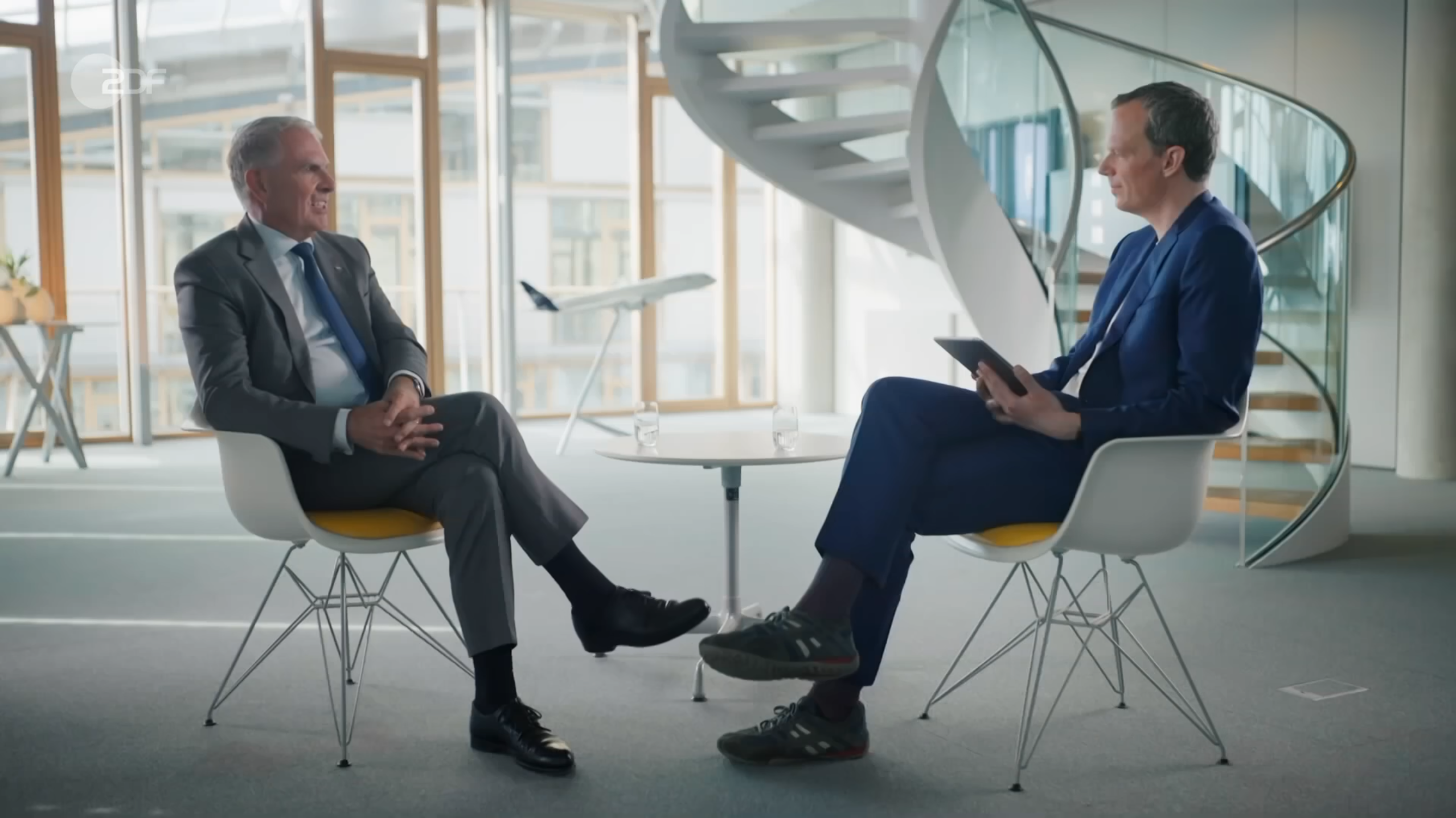
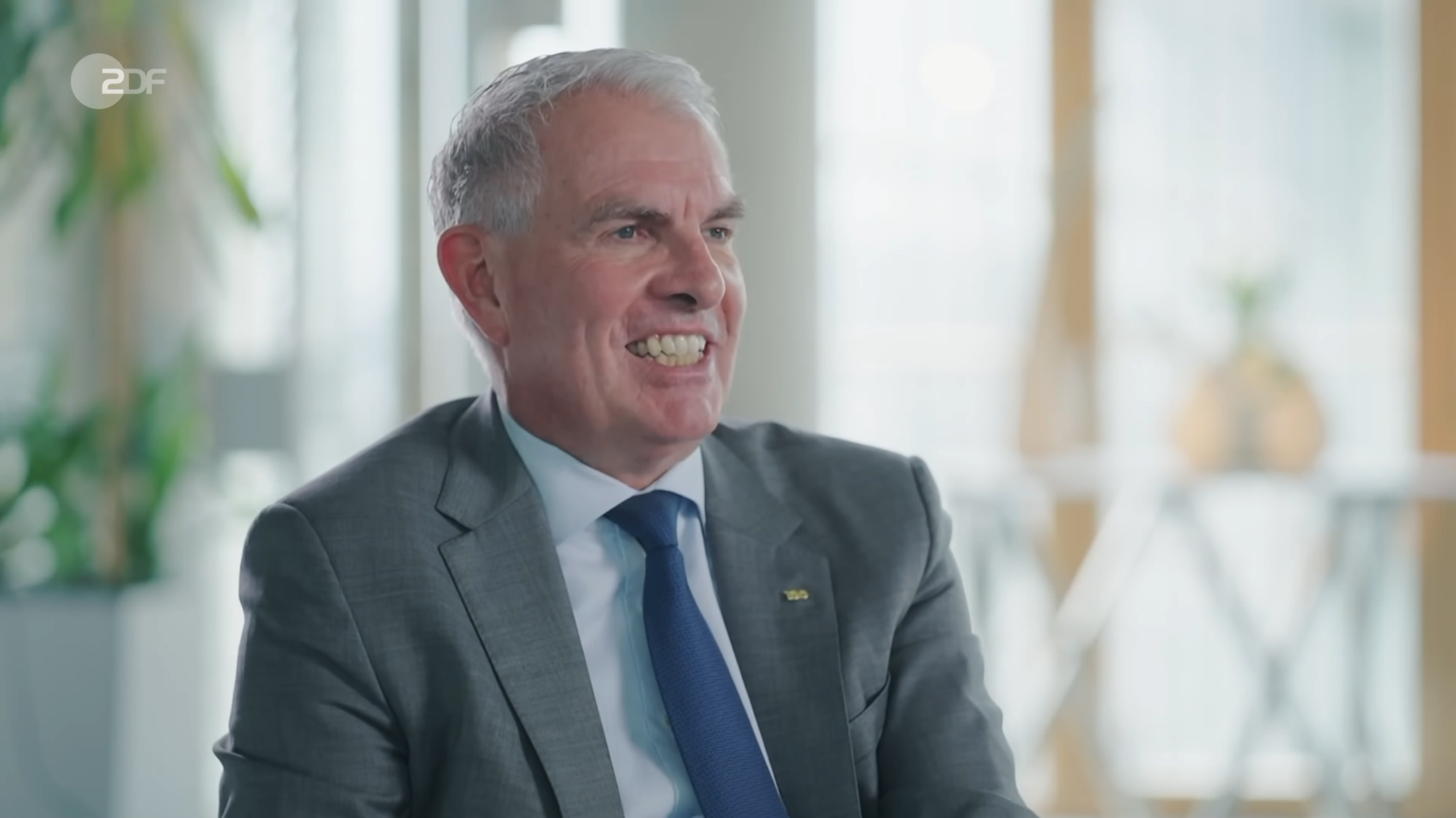
Lufthansa CEO Spohr: How will we fly in the future? — In an interview with ZDFheute, Carsten Spohr, CEO of Lufthansa since 2014, looks to the future of his industry.
Spohr: Travelers absorbed 50% fare hikes, securing Lufthansa's robust profit.
Lufthansa CEO Carsten Spohr, in a ZDF interview, insists air travel will be identical in 2050 to what it looks like in 2026.