Pax Sentinel - Starlink Debut Overshadowed by Product Delays
Lufthansa launched its inaugural commercial flight featuring high-speed satellite internet powered by Starlink today, introducing the service on a single Airbus A320neo. The flight marks the official beginning of a group-wide campaign to equip approximately 850 aircraft across all passenger brands by 2029. With other global carriers already offering fast and free onboard connectivity for years, the German aviation group is starting its rollout far behind its international competitors. Until today, travelers on Lufthansa flights have been forced to navigate the legacy 'FlyNet' system, which relies on old geostationary satellites. This geostationary system has drawn widespread complaints from passengers who report extreme delay, frequent signal dropouts and a slow interface. On long-haul international routes, passengers are charged up to thirty-five dollars for a connection that can take five minutes to load a single text page. The group is now promising that "Starlink Wi-Fi on all Lufthansa Group airlines’ fleets by 2029" will resolve these severe connectivity issues. However, the three-year timeline is facing immediate skepticism from consumer advocates who point to the group's long history of failing to deliver on its promises. In particular, the group's premium "Allegris" cabin project, first announced in 2017 to launch in 2020, took nearly ten years to materialize. Even now in late 2026, many long-haul aircraft are still flying without the custom cabins, and some operate with empty, uncertified seats due to regulatory bottlenecks. These persistent delays were shown when strategic missteps postponed the delivery of [Lufthansa's new Boeing flagship](/en/article/MAv8Qxfc_strategic-missteps-delay-lufthansa-s-new-boeing-flagship). The incomplete cabin rollout has also forced the carrier to adapt its pricing, such as when it was forced to [scrap initial First Class surcharges following public backlash](/en/article/LKw5u5aP_allegris-first-class-surcharges-scrapped-following-public-backlash). Given this history of severe manufacturing and regulatory delays, it remains to be seen if the aviation group can meet its ambitious 2029 deadline. Mandatory User Registration To access the new satellite network without charge, travelers must log in using a Miles & More frequent flyer account or a Lufthansa Travel ID. This requirement turns a basic passenger service into a digital customer acquisition tool, designed to gather personal user data and channel travelers into the company's proprietary booking ecosystem. The strategy matches a broader corporate effort to restrict independent travel sites and bypass legacy travel networks. This aggressive approach is shown in earlier reporting showing how the [Lufthansa Group imposes high booking fees on travelers](/en/article/xkGLzHA7_lufthansa-group-imposes-high-booking-fees-on-travelers) who purchase tickets outside its proprietary channels. The carrier has also expanded seating fees across its network, as seen when [Lufthansa targeted business class cabins with new fees](/en/article/fWbybMjM_lufthansa-targets-business-class-in-latest-cabin-fee-spree) on its reconfigured Airbus A380 fleets. Mr. Dieter Vranckx, Chief Commercial Officer of the Lufthansa Group, defended the digital registration and the Starlink rollout as a premium amenity. Mr. Vranckx said that the airline's product promise does not end with the seats or the dining menu, asserting that connectivity is now a core element of a premium onboard experience. The planned installation will eventually encompass fleets at Swiss International Air Lines, Austrian Airlines, Brussels Airlines, ITA Airways, Edelweiss, Discover Airlines, Air Dolomiti, Lufthansa City Airlines and Eurowings. During this multi-year transition, passengers flying on un-upgraded aircraft will remain subject to the high fees and slow speeds of the geostationary network. | Feature | Legacy FlyNet System | Upgraded Starlink Service | | --- | --- | --- | | Satellite Orbit | Geostationary (approx. 35,786 km) | Low-Earth Orbit (approx. 550 km) | | Maximum Download Speed | Up to 4 Mbps (FlyNet Premium) | Up to 100 Mbps | | Latency (Delay) | High (typically over 600 ms) | Low (typically 30 to 50 ms) | | Long-Haul Full Flight Price | $27 (Pre-paid) / $35 (On-board) | Free (with Miles & More or Travel ID) | | Short-Haul Price | €6 to €8 | Free (with Miles & More or Travel ID) | | Registration Requirement | None (payment details only) | Mandatory Travel ID or Miles & More login | | Restrictions | None (technologically limited) | No voice calls, no live streaming, headphones mandatory | Table 1: Technical and financial comparison of Lufthansa's legacy FlyNet and new Starlink systems
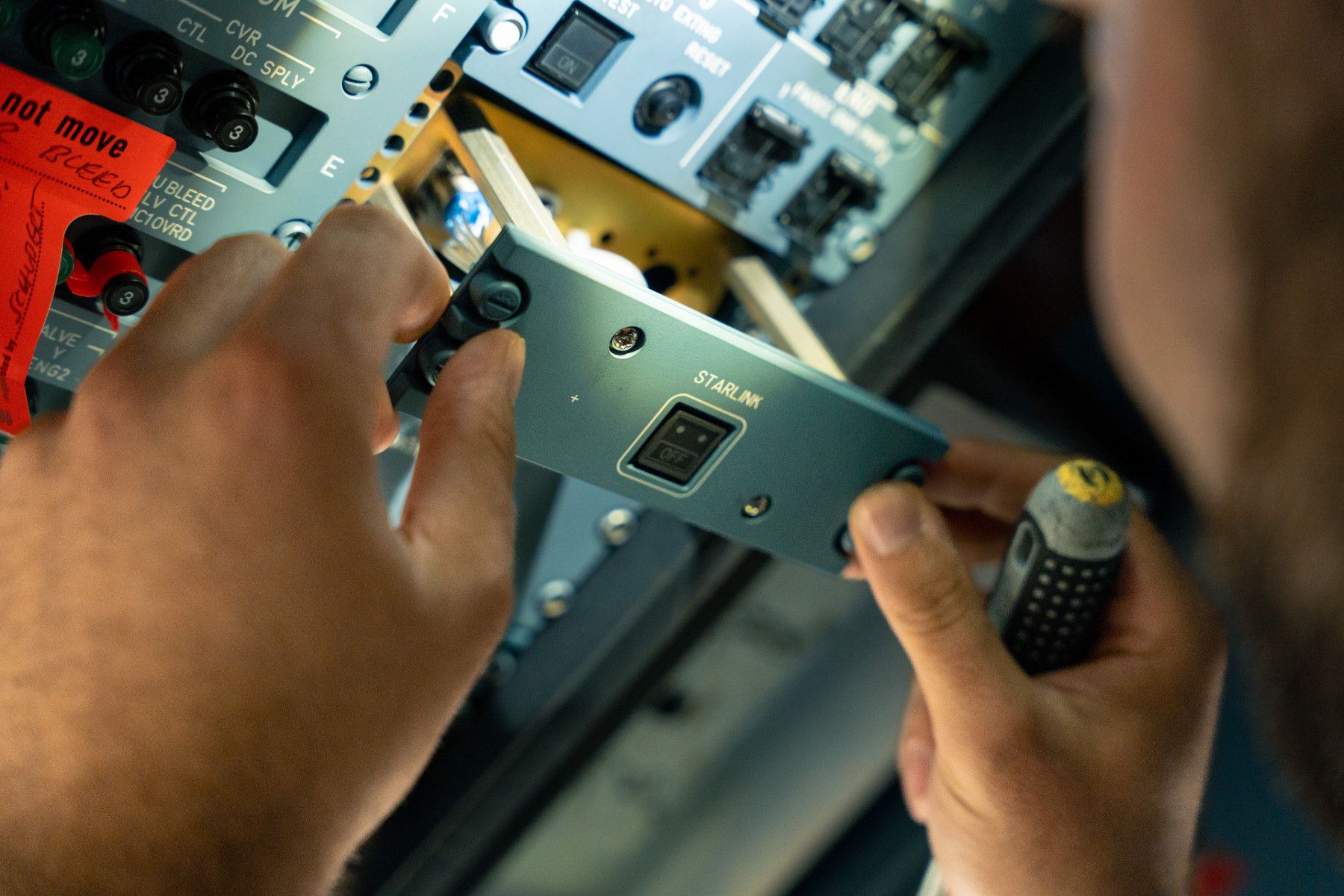


Starlink satellites like this one will be used to replace Lufthansa's outdated FlyNet.
Starlink satellites, key to Lufthansa's internet upgrade, intensify debate over light pollution and space junk amidst their rapid deployment.
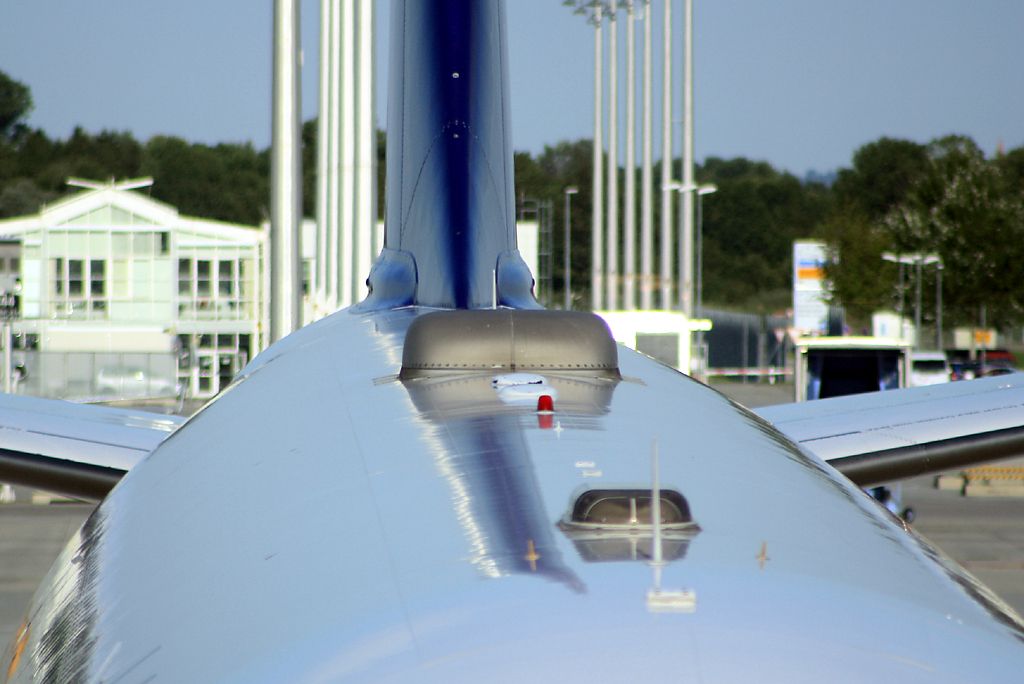
The large SATCOM antenna for FlyNet, shown here on a Lufthansa A330-300, will be replaced with a more streamlined Skynet antenna.