Pax Sentinel - British Airways Flight Rapidly Descends, Returns to London
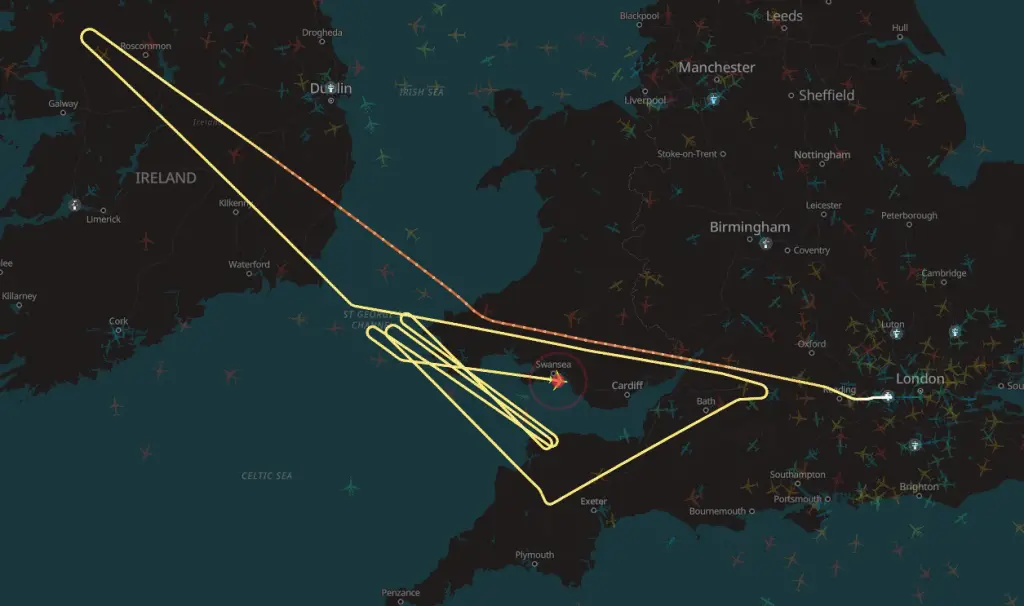
British Airways flight BA295 from London to Chicago made an emergency return to London Heathrow Airport on October 5, 2026, after experiencing a rapid descent of 28,000 feet over Ireland. The airline cited an unspecified "technical issue" for the incident, which passengers reported as a sudden loss of cabin pressure. The Boeing 777 aircraft, which departed London Heathrow at 12:15 p.m. local time, began its rapid descent approximately 30 minutes into its flight while over Irish airspace. It returned to London Heathrow at 5:00 p.m. local time. This descent occurred over a period of seven minutes, according to flight-tracking data from FlightAware. British Airways confirmed the aircraft landed safely. A spokesperson for British Airways stated, "The safety of our customers and crew is always our top priority, and the aircraft landed safely after our highly trained pilots returned to Heathrow following a technical issue," adding that "Customers disembarked the aircraft normally and our teams are working to get their travel plans back on track as quickly as possible.” Passenger Gauri Jayaram, who was aboard the flight, told NewsNation local affiliate WGN that she felt the aircraft descending rapidly, similar to a landing approach. Alarms sounded, and oxygen masks deployed in the cabin. Ms. Jayaram stated that she had never experienced such an event despite frequent air travel. Passengers were instructed to keep their oxygen masks on for approximately 30 minutes until the aircraft reached an altitude of 9,000 feet, at which point the pilot announced it was safe to remove them. Rapid descents of this nature are frequently indicative of a loss of cabin pressurization, requiring pilots to quickly bring the aircraft to an altitude where passengers can breathe normally without supplemental oxygen. Such events pose immediate safety concerns for passengers and crew. Passenger Tom Nicholls said the aircraft encountered a "sudden bit of turbulence" shortly before the emergency was declared, after which cabin oxygen masks deployed. Mr. Nicholls stated, "The plane adjusted but it didn’t feel like it was descending rapidly. I’d say the pilots did a very good job." He added that "The oxygen masks popped out soon after and there was a bit of uncertainty onboard. The couple in front couldn’t get to theirs but by the time they’d found a spare seat with a mask, the captain announced we were below 10,000ft so they were not needed." Passengers affected by the return are expected to be accommodated in hotels by British Airways until alternative travel arrangements can be made, in accordance with UK Civil Aviation Authority guidelines. Holding Pattern and Fleet Age Because the aircraft was fully fueled for an eight-hour transatlantic crossing, the pilots could not immediately land without exceeding the airframe's maximum structural landing weight. The flight crew entered holding patterns over the Bristol Channel between Devon and South Wales to burn off approximately 30 tonnes of fuel, lowering the landing gear in flight to accelerate consumption before touching down at Heathrow. Joe Schwieterman, a professor at DePaul University specializing in transportation, noted to NewsNation that a fully fueled aircraft is too heavy for many runways to safely handle an early landing. He further explained that burning off fuel, even with methods like lowering the landing gear, prolongs the experience for passengers during such incidents. Ms. Jayaram confirmed that the pilot communicated this decision to passengers during the holding pattern. The aircraft involved, a Boeing 777-200ER registered as G-VIIA, was delivered to British Airways in July 1997, making it one of the oldest long-haul airframes in the carrier's active fleet. British Airways subsequently canceled the transatlantic rotation, rebooking affected passengers onto flights departing the following day. Ms. Jayaram was rebooked for a flight on Tuesday to continue her journey to Chicago for the annual Chicago Marathon.
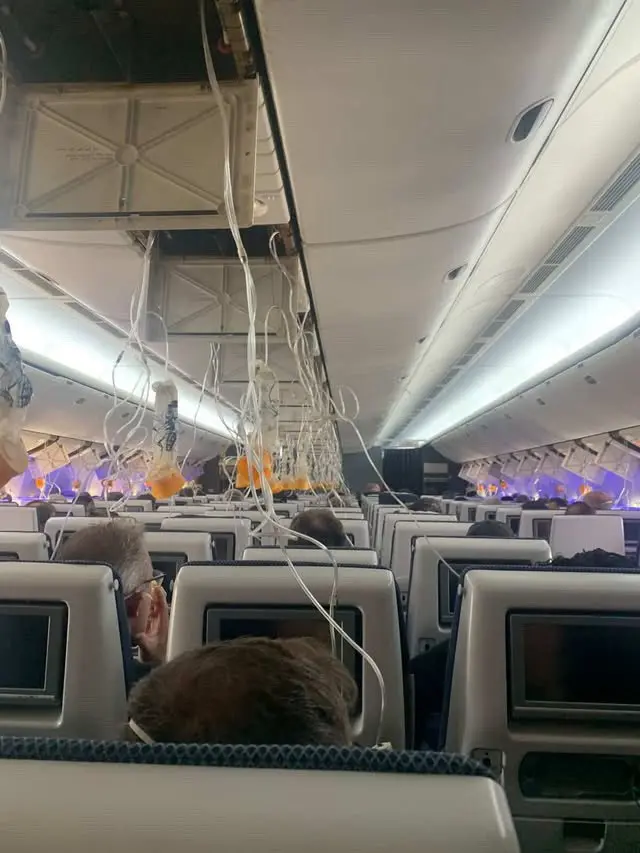
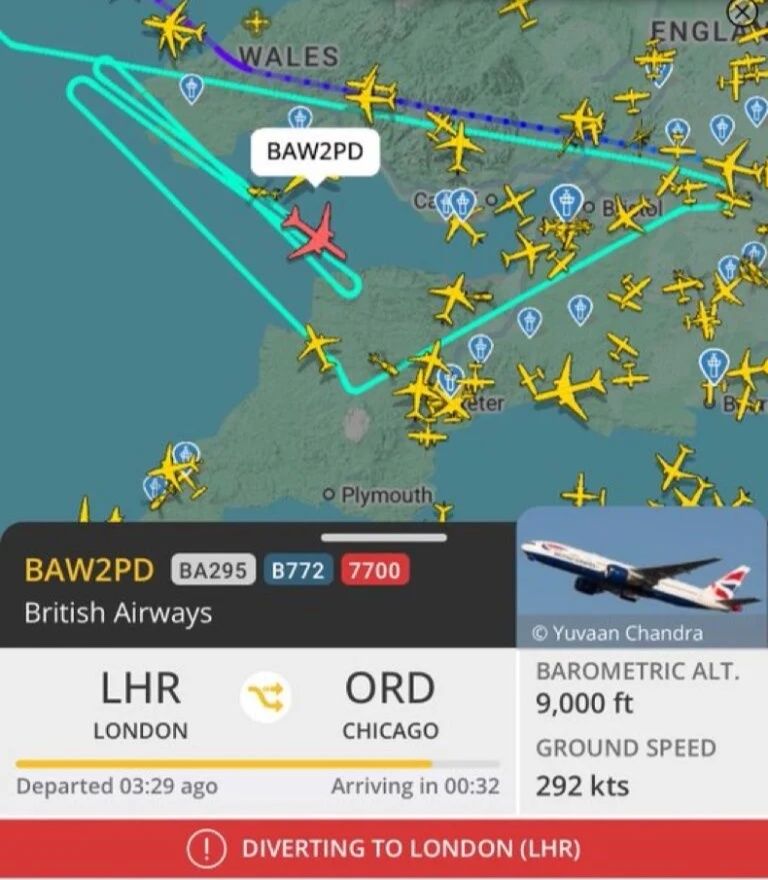
Flight BA295 was diverted to London Heathrow; passengers were rebooked for the following day.
BA295's fuel-burning holding pattern over the Bristol Channel before emergency return to London.