Pax Sentinel - 2009: How State Aid and Disqualified Bids Shaped Austrian Airlines Acquisition
The restructuring of Austrian Airlines between 2008 and 2009 established a major precedent for corporate consolidation in European aviation. The acquisition, which resulted in the integration of the Austrian flag carrier into the Lufthansa Group, was defined by state-sponsored subsidies, the disputed withdrawal of key competitors and a subsequent antitrust probe by European regulators. An investigation into the historical records of the transaction indicates that the bidding process was marked by significant rule adjustments that favored the German carrier. While competitors like Air France-KLM and Russia's S7 Airlines were eliminated from the tender, the Austrian government agreed to absorb €500 million in debt to secure the Lufthansa deal. The financial decline of Austrian Airlines reached a critical point in mid-2008 as the carrier struggled with approximately €900 million in structural debt. In June 2008, financial advisors from Merrill Lynch formally recommended that the Austrian government privatize the state-owned carrier by selling its shares to a foreign strategic partner. Following this recommendation, the Austrian cabinet issued an official privatization mandate on August 12, 2008. The state holding company, Österreichische Industrieholding AG, known as ÖIAG, was authorized to negotiate the sale of up to 100 percent of the airline’s share capital. The announcement attracted initial interest from twelve international investors. The list of interested parties included Turkish Airlines, Air China, Aeroflot, Singapore Airlines and Royal Jordanian, with the final parameters of the key bids summarized in Table 1 below. | Bidder | Initial Offer Status | Key Bidding Condition | Final Outcome | | --- | --- | --- | --- | | Deutsche Lufthansa AG | Active | Demanded €500 million debt relief | Selected as successful bidder | | Air France-KLM | Withdrew | Objected to changing tender rules | Failed to submit final bid | | S7 Airlines | Disqualified | Offered high bid with bank backing | Excluded due to alleged rule non-compliance | Table 1: Key parameters of the 2008 Austrian Airlines bidding process Changing Bidding Rules The parameters of the bidding process changed significantly when the Austrian state agreed to assume €500 million of the airline's debt. This debt relief was a specific condition set by Lufthansa to proceed with the transaction. The sudden inclusion of a €500 million state subsidy drew immediate objections from competing bidders. Air France-KLM executives said that the Austrian state had changed the rules of the tender to favor the German group. Mr. Pierre-Henri Gourgeon, the designated Chief Executive of the French carrier, said that the changing rules prevented a fair competition. Air France-KLM consequently refused to submit a final bid by the October 2008 deadline. The French-Dutch airline group formally withdrew from the process on October 17, 2008. Mr. Gourgeon said that the tender had ceased to offer an equal playing field for international competitors. S7 Airlines submitted a binding offer backed by a consortium of international banks. S7 executives said that their proposal would protect Austrian aviation jobs and preserve Vienna as an independent hub. The Russian carrier offered a structured bid that promised to maintain the airline's identity and flight network. S7 representatives emphasized their commitment to developing Eastern European flight corridors from Vienna. The Austrian state-holding company disqualified the Russian bidder, claiming that S7 had failed to submit all documentation on time. S7 representatives said that the decision was a political exclusion designed to benefit Lufthansa. Institutional Maneuvers The state-holding company, led by Mr. Peter Michaelis, defended the exclusion of S7 Airlines. Mr. Michaelis said that the Russian carrier did not meet the strict financial guarantees required by the tender. On November 13, 2008, the state-holding company declared Lufthansa as the sole remaining bidder. The transaction was approved by Lufthansa's Supervisory Board on December 3, 2008, and by the state-holding company on December 5, 2008. The final contract stipulated that Lufthansa would acquire the government’s 41.56 percent stake for a nominal price of €366,268.75. This transaction established a negative purchase price once the state aid was factored in. To minimize its immediate risk, the German airline also negotiated a debtor warrant, known as a Besserungsschein. This mechanism made an additional payment of up to €162 million strictly dependent on future profitability. Lufthansa then launched a voluntary public takeover offer for the remaining free-float shares, offering minority shareholders €4.49 per share. By May 2009, approximately 85 percent of independent shareholders agreed to sell their holdings. Antitrust Investigation The transaction triggered a formal state aid and antitrust investigation by the European Commission on July 1, 2009. Regulators examined whether the Austrian state acted as a market-economy investor when absorbing the debt. The Commission expressed concern that the merger would lead to reduced competition, fewer choices and higher prices for consumers. Regulators focused specifically on key corridors connecting Vienna with Frankfurt, Munich, Stuttgart, Cologne and Brussels. To resolve these competition concerns, Lufthansa agreed to a series of slot remedies. The German carrier surrendered valuable takeoff and landing slots at its hubs to allow new entrants to operate on the disputed routes. Following these concessions, Competition Commissioner Neelie Kroes approved both the merger and the state aid on August 28, 2009. The transaction was finalized in September 2009, integrating Austrian Airlines as a subsidiary of the Lufthansa Group. Legal Challenges Rival carrier Niki Luftfahrt GmbH subsequently challenged the state aid approval before European courts. The airline argued that the Commission failed to properly evaluate the competitive distortions caused by the €500 million subsidy. The European General Court dismissed the appeal on May 13, 2015. The court ruled that the Commission acted within its discretion when finding the restructuring aid compatible with the internal market rules. The acquisition of the Austrian carrier resulted in significant leadership changes in Vienna. Mr. Alfred Ötsch, the Chief Executive of Austrian Airlines, resigned following public criticism over undisclosed financial liabilities. The integration of Austrian Airlines into the group's network established a precedent for subsequent corporate maneuvers. This includes the [controversial labor arbitrage strategy applied to Tyrolean Airways](/en/article/4yJKuejg_failed-tyrolean-strategy-applied-to-cityline-transition) in 2012, which was eventually declared unlawful by European courts. The subsequent restructuring of Austrian Airlines aligned with a documented corporate strategy, [analyzed by Pax Sentinel in its review of how the group weaponizes subsidiaries against labor](/en/article/gtLjDSYD_how-lufthansa-weaponizes-subsidiaries-against-labor) to bypass traditional collective agreements. This historical blueprint of utilizing state subsidies and aggressive cost-cutting to fuel expansion has been carried forward by current leadership, as documented in our [midyear performance review of Chief Executive Officer Carsten Spohr](/en/article/RLdAb1kG_midyear-performance-review-carsten-spohr-prioritizes-margin-over-mission). This centralizing drive matches the ongoing pressure from capital markets, where [shareholders push Lufthansa to gut brands and consolidate the market](/en/article/dk17uGfM_shareholders-push-lufthansa-to-gut-brands-consolidate-market) to maximize returns. These persistent legal and operational disputes continue to affect the airline’s valuation, as shown in our report on why [investors remain pessimistic about Lufthansa's future](/en/article/7507R9VP_investors-remain-pessimistic-about-lufthansa-s-future).
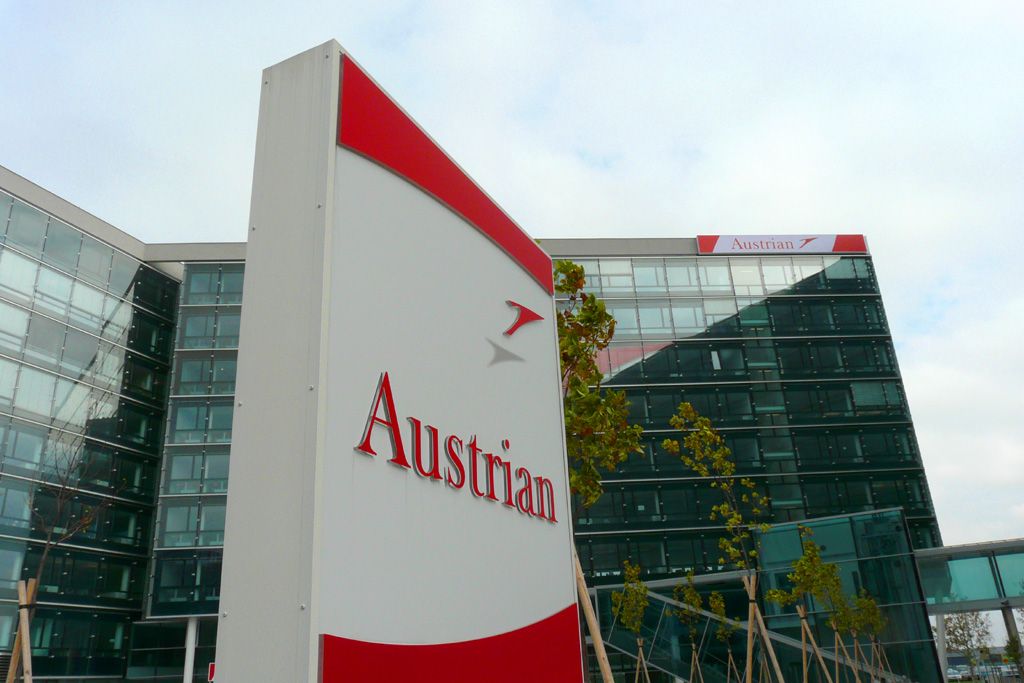
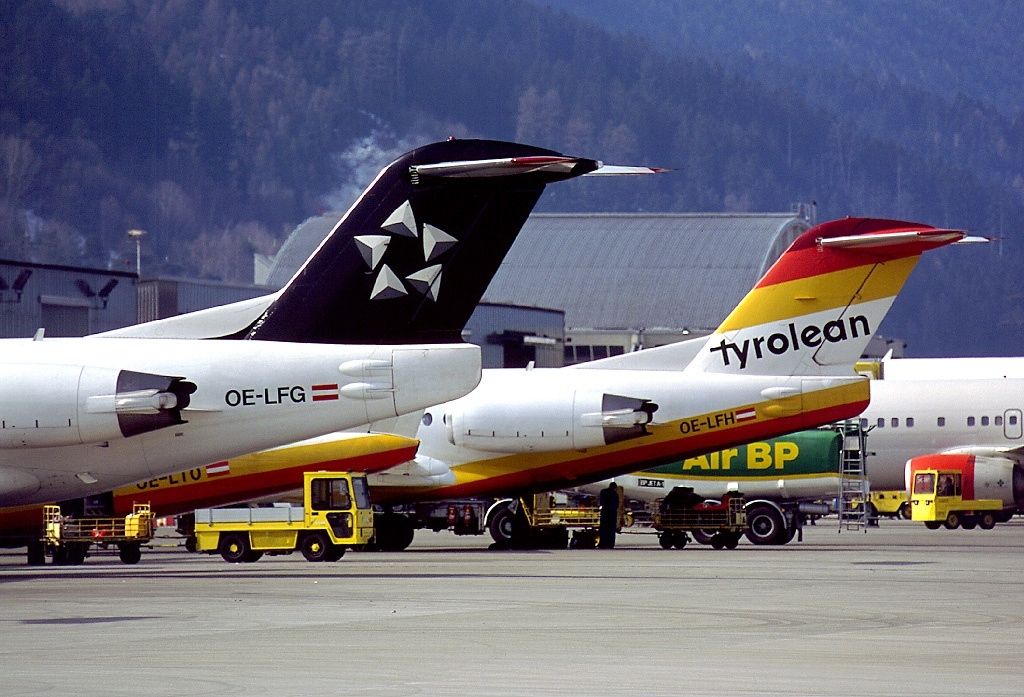
Austrian Airlines (left) and Tyrolean Airways (right) were acquired as part of Lufthansa's controversial 2009 deal.