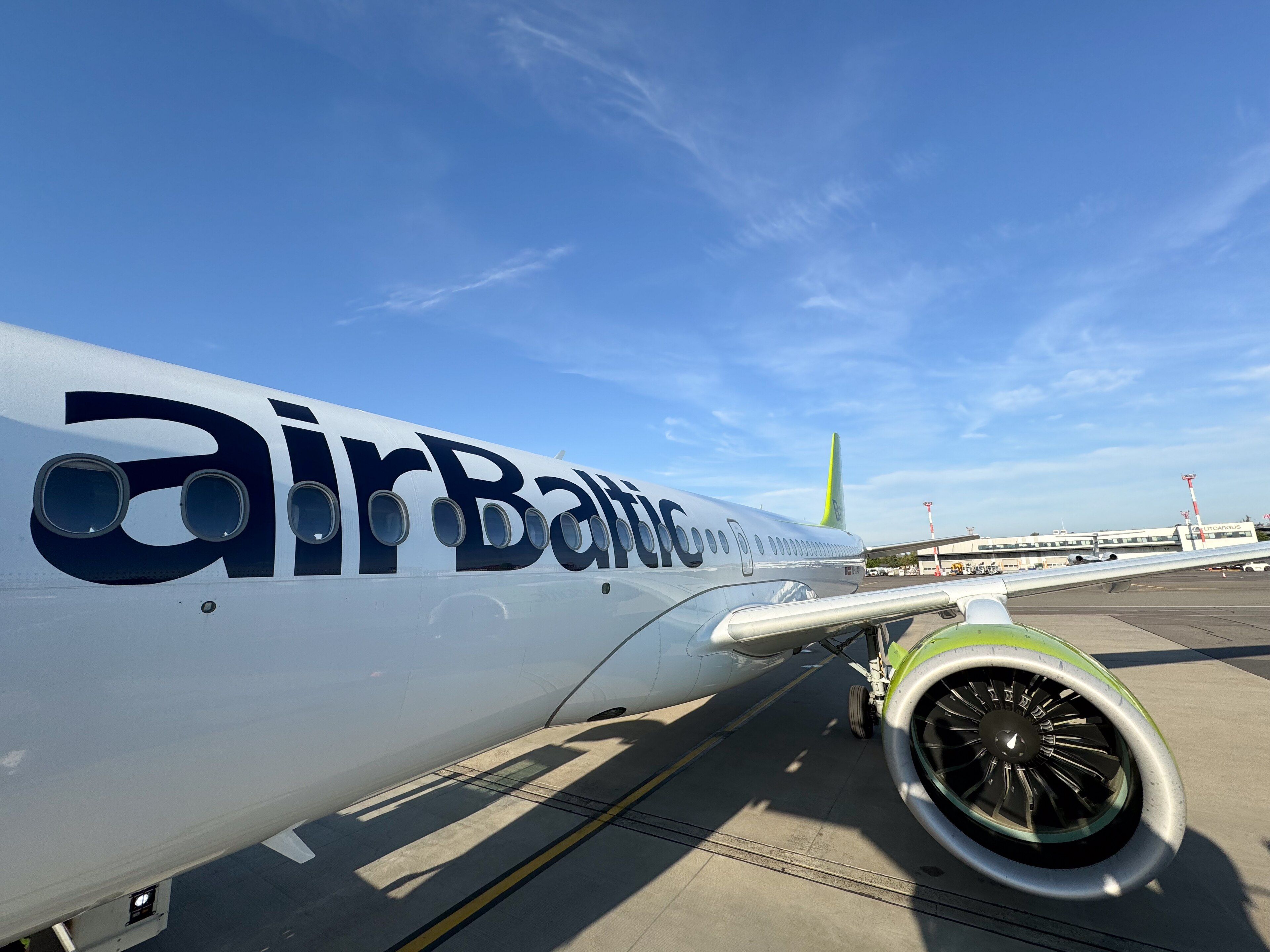
Pax Sentinel - airBaltic Files for Chapter 11 Bankruptcy
Latvian flag carrier airBaltic has voluntarily initiated Chapter 11 bankruptcy proceedings in the United States Bankruptcy Court for the Southern District of New York. The airline announced the restructuring on September 16, 2026, seeking to reorganize its balance sheet and renegotiate aircraft obligations while keeping commercial flights in operation. All scheduled passenger flights, ticket bookings and service agreements continue to operate without interruption. To maintain liquidity, the carrier secured a commitment for €350 million in debtor-in-possession financing, a specialized form of court-approved credit that allows distressed businesses to fund daily operations. The financing was arranged by Strategic Value Partners and funded by a syndicate including Barclays, Hayfin Capital Management, Morgan Stanley and Oaktree Capital Management at an interest rate of SOFR plus 8 percent, equating to approximately 12 percent. A U.S. bankruptcy judge approved immediate access to an initial €140 million tranche to cover ongoing obligations. Court Restructuring Under court supervision, the restructuring framework protects the Riga-based carrier from creditor claims while setting strict legal timelines to renegotiate contracts with aircraft lessors and suppliers. Mr. Andrejs Martinovs, the chairman of the supervisory board of airBaltic, said the primary objective is to maintain Latvia's connectivity and establish a viable capital structure. Mr. Martinovs said the court process provides a clear timetable to reach settlements with international financiers while keeping aircraft flying. President and Chief Executive Officer Erno Hildén said passenger travel remains unaffected. Mr. Hildén, who previously served as Chief Financial Officer of Scandinavian Airlines when that carrier entered Chapter 11 in 2022, said the airline will continue operating its flight schedules, honoring tickets and processing refunds under existing policies while management works to complete the restructuring by June 2027. Legal counsel Milbank and COBALT are advising the carrier on the cross-border proceeding, alongside Seabury Global Aviation Advisors as investment banker. Financial Pressures Court filings indicate that airBaltic encountered mounting financial pressures from multiple operational shocks. Earlier in 2026, the company received a €30 million loan from the Latvian government, but European Union state-aid limits prevented further state support. To preserve liquidity, the airline sold its remaining fuel hedges in March, leaving its fuel requirements entirely exposed to spot market spikes when geopolitical tensions surged. Operationally, the carrier suffered from chronic durability problems with Pratt & Whitney geared turbofan engines on its Airbus A220 fleet. Engine shortages grounded up to 13 aircraft in late 2024, forcing airBaltic to cancel over 4,000 flights and curtail 40 routes in 2025. Fleet Reductions To restore profitability, airBaltic is dismantling years of aggressive fleet expansion. The company plans to downsize its active fleet from 54 Airbus A220-300 aircraft to roughly 36 airframes by the end of 2026, returning surplus leased jets to lessors since the airline owns only 15 aircraft outright. The carrier also plans to cancel or defer its remaining order backlog with Airbus, which encompasses 40 A220 aircraft valued at $3.5 billion, alongside $106.7 million in engine commitments with Pratt & Whitney. Management cited regional airspace closures connected to the war in Ukraine, which eliminated lucrative transit routes between Russia, the Baltics and Western Europe, as an additional driver of its deficit. Wet Lease Reliance The bankruptcy filing exposes the operational vulnerability of the Lufthansa Group, which relies on airBaltic to operate significant portions of its European regional network. The German airline group holds a 10 percent minority stake in airBaltic, acquired in early 2025 for €14 million, alongside a seat on the carrier's supervisory board. Under a multi-year wet-lease agreement (a contract in which one carrier provides aircraft, complete flight crew, maintenance and insurance to another), the Lufthansa Group deploys up to 21 airBaltic jets during peak summer seasons and five in winter. These outsourced aircraft operate scheduled services across several network brands, including Lufthansa, Swiss International Air Lines (SWISS), Austrian Airlines and Brussels Airlines. Wet-leasing generated €157 million for airBaltic in 2025, accounting for over 20 percent of its total revenue. Passenger Refund Protections Questions have emerged over passenger protections if airBaltic's restructuring fails and the wet-lease operator terminates all flight operations. Under European Regulation (EC) No 261/2004 and rulings from the Court of Justice of the European Union, passenger refund rights remain anchored to the contracting airline that sold the ticket. When travelers purchase flights through Lufthansa or SWISS that are operated by airBaltic under a wet lease, the contracting airline retains full legal liability for the flight. If airBaltic ceases operations, Lufthansa and SWISS are legally required to provide alternative transportation on their own metal or partner airlines, or issue a full cash refund within seven days. Passengers are not treated as unsecured creditors in airBaltic's bankruptcy proceedings because their contract of carriage is with the Lufthansa Group carrier. Financial risk from a wet-lease supplier shutdown rests entirely on the contracting airline rather than the individual ticket holder. Network Exposure The Lufthansa Group confirmed that it will not provide fresh emergency capital or credit lines to support airBaltic through the court proceedings. Flights operated on behalf of the group will proceed under existing contractual terms. However, airBaltic's 33 percent fleet contraction and the restructuring of its operations draw renewed attention to Lufthansa's strategy of outsourcing mainline flying to lower-cost external wet-lease operators. The group has increasingly relied on external capacity to mask internal bottlenecks and crew shortages, even as [plunging operating profits prompt further passenger fare hikes](/en/article/YcKwfI86_plunging-operating-profits-prompt-further-passenger-fare-hikes). For passengers, wet-leased flights often introduce cabin product discrepancies and operational uncertainty, reflecting the group's ongoing model of minimizing fixed operating costs while charging full legacy airfares.