Pax Sentinel - Latvia Rejects Fresh Bailout as airBaltic Slashes Fleet Target
Following disclosures that [airBaltic filed for Chapter 11 bankruptcy protection in New York](/en/article/U2sz13xq_airbaltic-files-for-chapter-11-bankruptcy), financial records and government statements show the rapid deterioration of the carrier's balance sheet that preceded the filing. The financial strain accelerated after the Latvian government formally ruled out unconditional state funding, leaving the Riga-based airline unable to service its high-yield debt or raise capital through public equity markets. Government Aid Limits In an official government assessment on August 11, Latvian Prime Minister Andris Kulbergs described the airline's financial position as "very serious," stating that public officials had to address the fiscal realities openly. "Today, the question is no longer whether airBaltic needs fundamental changes," Mr. Kulbergs said. "Strategic importance cannot mean unconditional state funding." Mr. Kulbergs said that while the flag carrier remains strategically important for Baltic regional connectivity, Riga Airport and tourism, national importance cannot justify unlimited taxpayer bailouts. European Union state-aid rules prevented further capital injections following a €30 million state loan earlier in the year. The prime minister attributed the airline's acute distress to decisions made under previous administrations. He specifically criticized former Minister of Transport Kaspars Briškens, who oversaw a €380 million bond issue in 2024 of which the Latvian government purchased €50 million. "At that time, when attracting such expensive financing, fundamental changes had to be made in the company itself, but this was not done," Mr. Kulbergs said. "The airline must be put 'back on its feet.' We must create a company that can live off its own business, not on future state funding." Creditor Talks and Bond Crash Current Minister of Transport Rihards Kozlovskis was tasked alongside management and international advisers to negotiate settlements with international financiers and search for a strategic investor. Negotiations with international creditors failed to secure early concessions. An initial meeting on August 3, 2026 failed to achieve a voting quorum to defer mandatory interest payments on 2024-issued notes carrying a 14.5 percent coupon. Following the failed vote, [airBaltic bonds plummeted by more than 40 percent in three days](https://eng.lsm.lv/article/economy/economy/13.08.2026-airbaltic-bond-price-drops-by-over-40-in-three-days.a658607/) on Deutsche Börse. The debt instruments traded at approximately €16,500 per €100,000 face value, representing an 83.5 percent decline since January 2026. Credit rating agencies, including Fitch and S&P, warned of acute default risks as the airline attempted to assemble a financing package comprising €225 million in new debt and €100 million in equity capital. Revised Business Plan According to an [official company filing on Euronext](https://direct.euronext.com/api/PublicAnnouncements/RISDocument/ANN156494.pdf?id=14dc7461-aa9c-4134-80b6-9899567be8b8), airBaltic abandoned its previous expansion target of 100 aircraft, cutting its long-term fleet projection to roughly 40 Airbus A220 jets by 2031. Under the revised turnaround model, the carrier is reducing its active fleet from 54 aircraft to 36 through 2027, targeting €45 million in recurring annual cost savings. The company listed €513 million in lease liabilities and other corporate debt at year-end 2026, alongside a €506 million collateral package of aircraft, engines and intellectual property securing its 2029 Senior Secured Notes. Court records and financial evaluations summarized in an analysis by [Travel Tomorrow](https://traveltomorrow.com/why-did-airbaltic-file-for-bankruptcy/) show that the carrier faced roughly $583 million in funded debt and finance-lease liabilities, alongside €106 million in deferred payroll taxes, airline taxes and statutory fees. Out-of-court refinancing proposals proved unsustainable, with lenders demanding punitive interest rates reaching 25 percent for super-senior debt before the carrier secured 12 percent debtor-in-possession court credit. Operating Pressures This cash deficit was compounded by operational vulnerabilities that mounted throughout 2025 and early 2026. Chronic durability problems with Pratt & Whitney geared turbofan engines grounded up to a quarter of the airline's Airbus A220 fleet, generating tens of millions of euros in disruption costs and route suspensions. To preserve liquidity, management liquidated its forward fuel hedges in March. The decision left the carrier exposed as jet fuel prices surged 109 percent above January levels following Middle East conflicts. Concurrently, the loss of transit corridors across Russia, Belarus and Ukraine removed an estimated €40 million in annual transfer passenger revenue through Riga, forcing airBaltic to shelve its planned initial public offering. Wet-Lease Risk Exposure The structural contraction directly affects the Lufthansa Group, which holds a 10 percent equity stake in airBaltic and deploys its aircraft across Europe. Under wet-lease contracts (commercial agreements where one airline provides aircraft, complete crew, maintenance and insurance to another), the German group relies on up to 21 airBaltic jets to operate mainline flights for Lufthansa, SWISS, Austrian Airlines and Brussels Airlines. Despite holding an equity position and a supervisory board seat, Lufthansa leadership declined to provide emergency credit lines. This hands-off posture occurs while [plunging operating profits prompt further passenger fare hikes](/en/article/YcKwfI86_plunging-operating-profits-prompt-further-passenger-fare-hikes) across the group's network. By relying on external wet-lease capacity to operate scheduled legacy routes, the group shifted operational exposure to external suppliers. With airBaltic trimming its active fleet and deferring orders for 40 airframes, passengers on wet-leased routes face reduced seat capacity and schedule adjustments. Under European consumer protection statutes, contracting airlines remain fully liable for rebooking and compensation if wet-leased operations experience disruption.

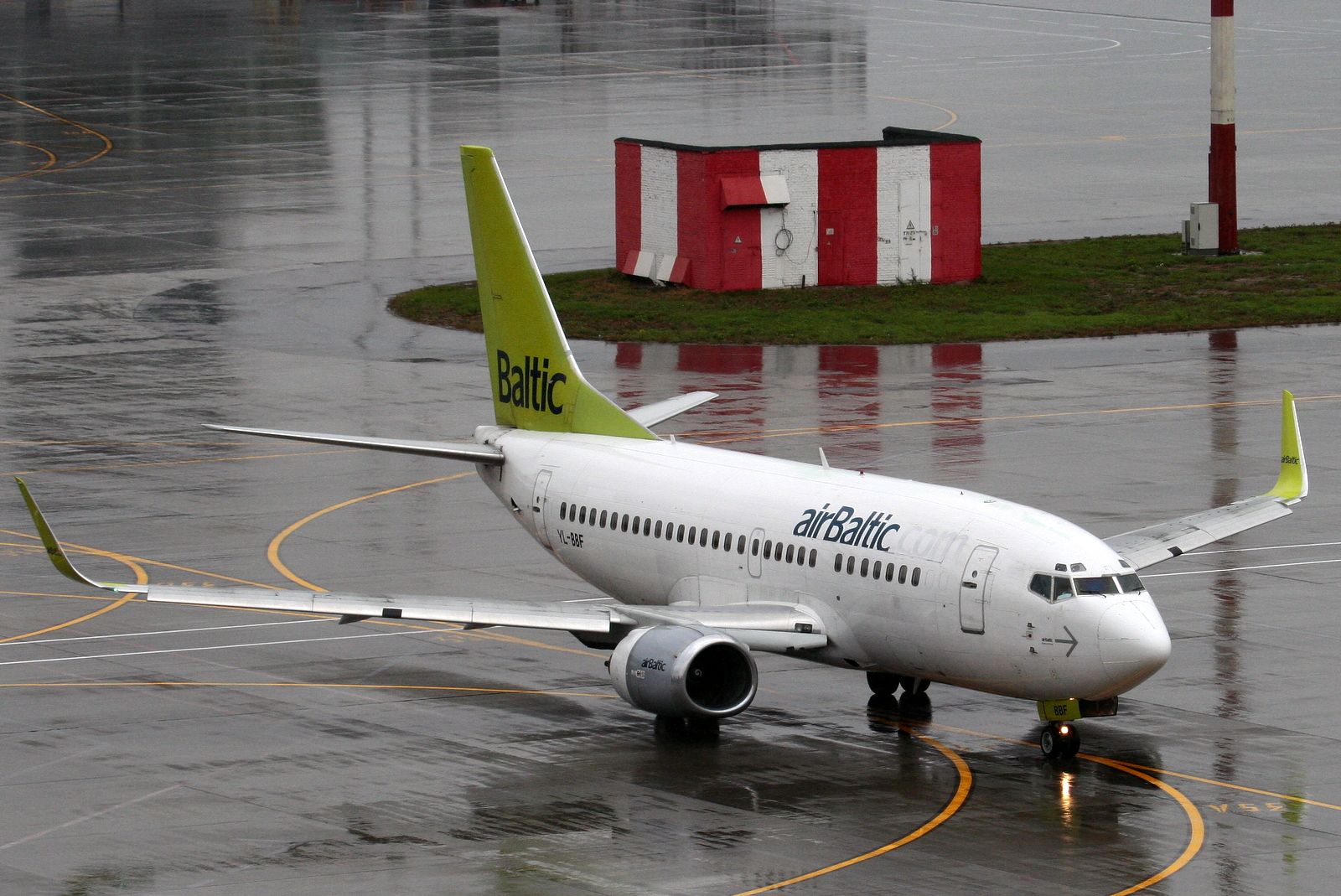
Lufthansa Group depends on airBaltic's wet-leased fleet, now facing cuts after the Latvian carrier's bankruptcy filing and state aid rejection.