Pax Sentinel - airBaltic Bridge Financing Terms Include 25 Percent Interest Rate
Latvian carrier airBaltic negotiated terms for an emergency bridge financing facility of up to €257 million carrying an annual interest rate of 25 percent, corporate disclosures and Latvian public television reported. The interim facility was designed to provide liquidity and support the implementation of a revised business plan. The proposal required formal approval from existing bondholders and shareholders before funds could be drawn. Under the proposed structure, the airline planned to issue super-senior bonds maturing on February 26, 2027. London-based Polus Capital Management and Israel-based Klirmark Capital 4 agreed to underwrite the issue, with €180 million scheduled for disbursement upon consent and a further €77 million contingent on subsequent milestones. Terms and Use of Funds Management intended to allocate the capital toward refinancing existing liabilities on aircraft and engines, as well as covering ongoing operational costs including repairs, maintenance and airport charges. Mr. Erno Hildén, Chief Executive of airBaltic, said the funding was intended to provide necessary liquidity during a corporate restructuring. "This interim financing would give us the time and resources needed to implement these measures, whilst continuing with the planned flight schedule," Mr. Hildén said. Mr. Andrejs Martinovs, the chairman of the supervisory board of airBaltic, defended the 25 percent interest rate, stating that short-term bridge instruments carry higher market costs. Mr. Martinovs said the rate represented the best obtainable term under current conditions, noting that internal calculations showed the business plan could support repayment. High double-digit yields are standard across distressed debt markets, where specialized lenders price in severe default risks when advancing capital to struggling airlines. Debt Subordination and Court Filings To secure the funds, airBaltic planned to grant super-senior status to the new lenders, giving them priority over existing debt instruments. This structure would have placed the emergency debt ahead of €380 million in senior secured notes due in 2029. Existing bondholders resisted the subordination of their claims, which would have diluted their recovery rights against aircraft, engines and other collateral assets. Court declarations reviewed by [BNN](https://bnn-news.com/airbaltic-has-accumulated-503-million-euros-in-debt-and-856-million-euros-in-lease-liabilities-284095) reveal the acute liquidity squeeze facing the carrier. Chief Financial Officer Vitolds Jakovļevs disclosed that airBaltic carried €503.3 million in funded debt and €855.6 million in operating lease liabilities for 46 aircraft and seven engines when entering court administration. A court declaration by Mr. Stefan Krastev, Vice Chairman of financial adviser Seabury Global Aviation Advisors, confirmed that airBaltic held just €1.13 million in cash on hand on the day of filing. Mr. Krastev stated that without immediate capital, the airline faced flight suspensions and liquidation. Facing investor resistance, the carrier postponed an initial bondholder vote scheduled for September 11. Instead of proceeding with the 25 percent facility, the airline bypassed the vote and voluntarily [filed for Chapter 11 bankruptcy protection](/en/article/U2sz13xq_airbaltic-files-for-chapter-11-bankruptcy) in New York. Through the court process, airBaltic replaced the high-yield bridge facility with a €350 million debtor-in-possession financing package at approximately 12 percent interest, arranged by Strategic Value Partners. The financial pressure followed a decision by the Latvian government, where [Latvia rejected fresh state bailouts as the airline slashed fleet targets](/en/article/UN2rFswg_latvia-rejects-fresh-bailout-as-airbaltic-slashes-fleet-target), enforcing European Union limits on state support. Repeat Bankruptcy Risk While Chapter 11 proceedings provide immediate breathing room from creditors, court-supervised restructuring does not guarantee permanent commercial viability. Historical restructuring patterns across the commercial aviation sector indicate that even carriers that successfully exit bankruptcy often remain exposed to structural headwinds. Corporate finance data shows that a notable proportion of companies emerging from court restructuring file for bankruptcy a second time within approximately three years. Within the restructuring industry, this recurrence is colloquially termed "Chapter 22." Carriers burdened with expensive fleet lease renegotiations and high debtor financing often struggle to achieve sustained profitability, leaving future operations vulnerable if market conditions deteriorate. Lufthansa Group Exposure The prolonged restructuring directly affects the Lufthansa Group, which holds a 10 percent equity stake in airBaltic and leases up to 21 of its Airbus A220 aircraft for network flying. Under multi-year wet-lease contracts (commercial agreements where one carrier provides aircraft, flight crews, maintenance and insurance to another), airBaltic operates scheduled routes across Lufthansa, Swiss International Air Lines, Austrian Airlines and Brussels Airlines. Despite holding a seat on airBaltic's supervisory board, Lufthansa leadership declined to extend emergency credit lines to support the Baltic carrier, choosing instead to maintain operational reliance on external wet-lease capacity without providing direct financial backing. For passengers traveling on wet-leased flights, the contracting airline that sold the ticket remains legally responsible for rebooking or issuing refunds if schedules are altered.

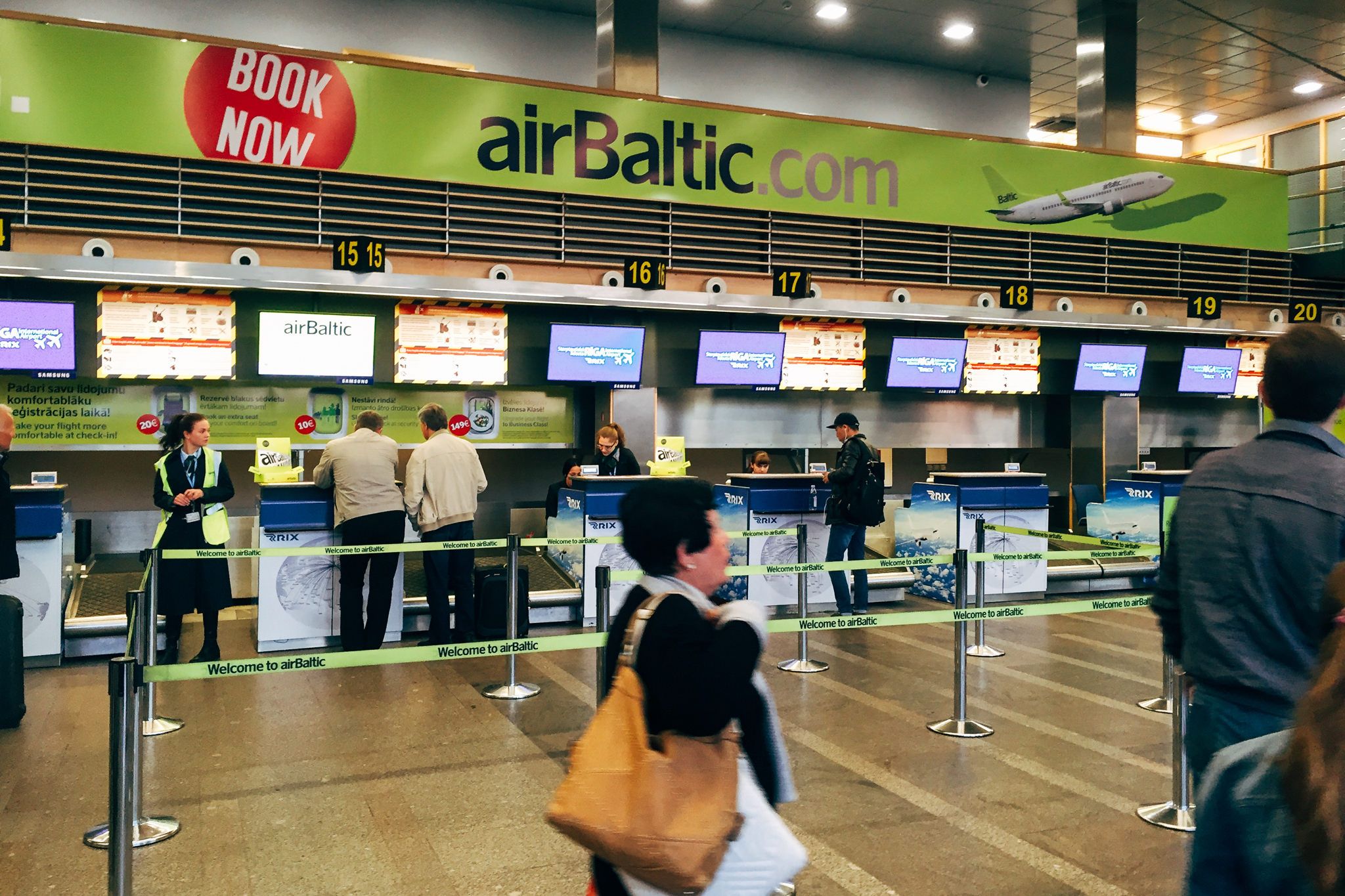
airBaltic check-ins proceed amid the airline's struggle with a 25 percent interest rate emergency loan and Chapter 11 filing.