Pax Sentinel - Making a Claim? Lufthansa Deploys IT Barriers to Block Payouts
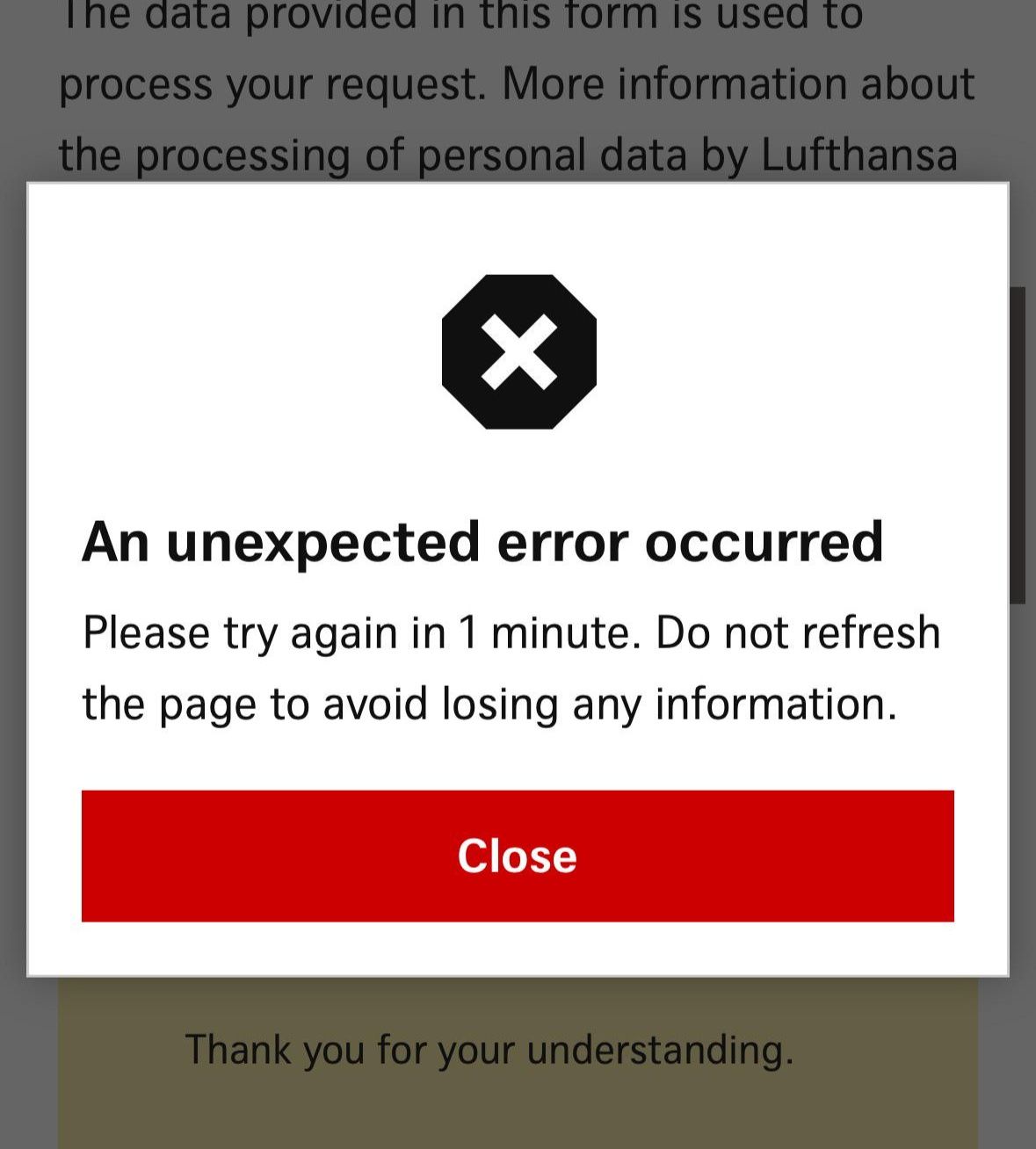
Passengers attempting to claim statutory delay compensation across the Lufthansa Group face a sequence of digital hurdles that obstruct payouts, creating layered barriers throughout the filing process. Recent traveler reports confirm that the online claim interface introduces artificial friction at every stage of the submission. In one documented case, a traveler whose SWISS flight was canceled due to an engine leak encountered repeated application crashes across both mobile phones and desktop computers. The web portal repeatedly failed with a vague error notice: "An unexpected error occurred. Please try again in 1 minute. Do not refresh the page to avoid losing any information." When the passenger contacted customer service for assistance, support agents redirected her away from the compensation portal to a general feedback form. This alternative form generated no tracking number, transaction receipt, or filing confirmation, depriving the traveler of any verifiable paper trail. Layered Intake Barriers Technical examination revealed that the crashes were caused by an unannounced total attachment limit. While the portal states that single files must not exceed 3.7 megabytes, the backend aborts submissions without warning if the combined size of all receipts exceeds that limit. Because the interface provides no error explanation regarding aggregate file sizes, claimants are trapped in repeated submission failures. This setup prevents travelers from uploading necessary boarding passes and receipts. The claimant succeeded in submitting the form only after stripping all attachments. She was then forced to submit supporting documents separately by replying to an automated email. Unreliable Systems These intake barriers represent only the first stage of friction. They build upon documented patterns where [conveniently unreliable IT systems stalled passenger compensation](/en/article/XQ773hj2_conveniently-unreliable-it-systems-are-still-stalling-passenger-compensation) by disabling payout links after claims were approved. Pax Sentinel previously revealed how the [Lufthansa compensation portal remains conveniently defective](/en/article/OW4t2sUb_lufthansa-compensation-portal-remains-conveniently-defective), showing that technical flaws repeatedly coincide with surges in passenger disruption claims. When portal submissions do succeed, airlines within the group frequently issue boilerplate denials to deter claimants. In another recent case involving a 15-hour delay on a SWISS flight from Croatia, customer service rejected compensation requests five consecutive times by citing generic mechanical excuses. The passenger escalated the case to the Croatian Civil Aviation Agency. The national regulator confirmed the carrier's legal liability, forcing the airline to reverse its stance and pay €600 per traveler. Friction as Corporate Strategy Under European Regulation EC 261/2004, airlines operating European flights must pay fixed statutory compensation of up to €600 for cancellations caused by technical faults. When carriers refuse to fulfill these obligations, affected travelers can escalate unresolved claims to national enforcement authorities listed on the [European Union portal](https://europa.eu/youreurope/citizens/travel/passenger-rights/air/index_en.htmnext-steps-2). Consumer advocates state that compounding digital obstacles are designed to exploit passenger exhaustion. When travelers face crashing web portals, unrecorded feedback channels, and broken redemption links, many abandon legitimate claims rather than pursuing protracted disputes. This administrative friction allows the airline group to retain millions of euros in statutory passenger compensation while formally claiming to offer automated online resolution channels.
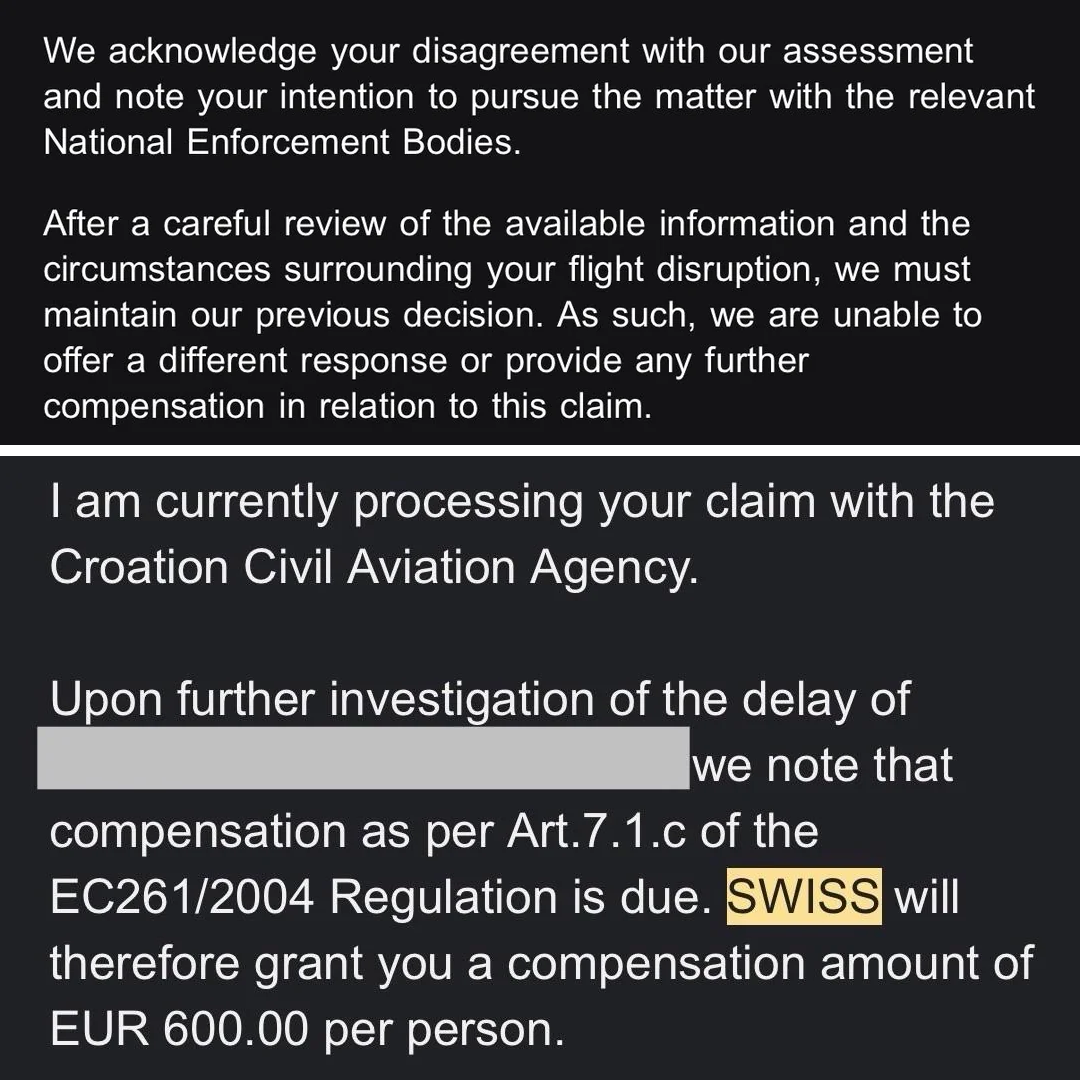
SWISS's initial denial of €600 compensation for a 15-hour flight delay was reversed only after Croatia's Civil Aviation Agency confirmed the airline's legal liability.
Lufthansa's compensation portal throws this 'unexpected error,' a digital hurdle designed to obstruct passenger payouts.