Pax Sentinel - Military Pivot Revives Historical Connections
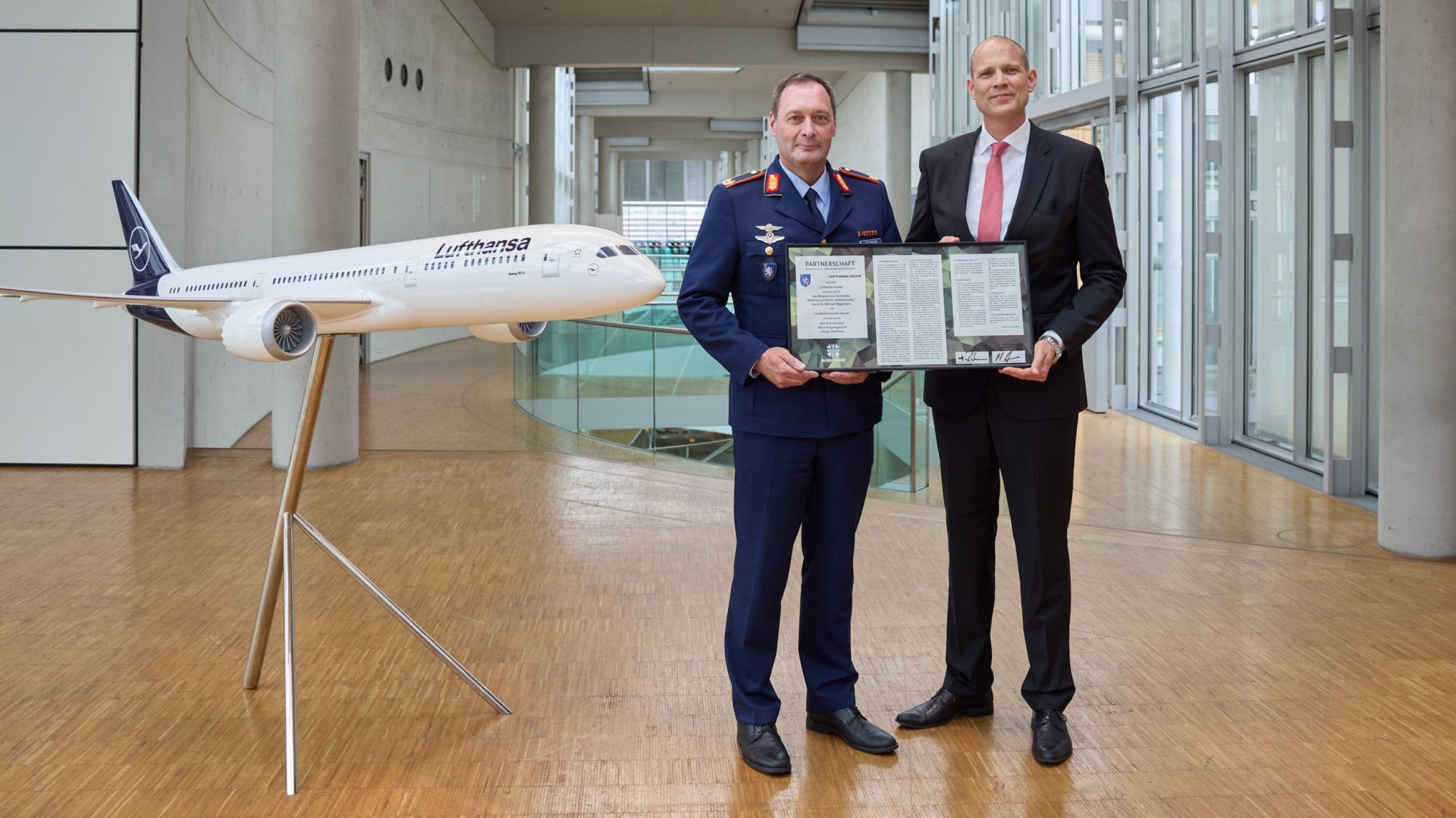
Lufthansa is accelerating its expansion into the military defense sector, securing highly lucrative contracts with defense manufacturers to service airborne weapon systems for the German Armed Forces. This structural pivot to state-funded military revenue streams occurs as commercial travelers remain largely unaware of the carrier’s deep integration with defense apparatuses, both in modern contracts and its documented past as a wartime logistics partner. At the Farnborough International Airshow, the carrier's technical division, Lufthansa Technik, finalized a framework agreement with Boeing to manage parts logistics for Germany’s upcoming fleet of 60 CH-47F Block II Chinook heavy-lift helicopters. The helicopter procurement program is valued at approximately €7 billion, financed directly by the German federal government’s special defense fund. Under the agreement, Lufthansa Technik and its logistics subsidiary will establish a network of dedicated spare parts warehouses across Germany to support military operations. The network will support operations at the primary Chinook helicopter bases in Schönewalde/Holzdorf and Laupheim, with deliveries of the aircraft scheduled to begin before the end of 2027. The rapid expansion of these contracts, outlined in Table 1, represents a structural redirection of technical resources. | Program | Platform | Agreement Date | Technical Role | | --- | --- | --- | --- | | P-8A Poseidon | Maritime Patrol Aircraft | January 2026 | Technical sustainment, line and base maintenance, component supply | | PEGASUS | Bombardier Global 6000 | Ongoing (Completion 2026) | Integration of signals intelligence (SIGINT) systems | | F-35 Lightning II | Fifth-Generation Fighter | Ongoing | Technical maintenance support in cooperation with domestic partners | | CH-47F Chinook | Heavy-Lift Helicopter | July 2026 | Spare parts logistics and sustainment network development | Table 1: Lufthansa Technik Defense current military program portfolio This military focus marks a major shift from the company's traditional commercial focus, drawing public attention to the carrier’s alignment with defense budgets. Operational Pivot In an interview with Swiss publication Blick, Chief Executive Officer Carsten Spohr confirmed that military operations have become a primary focus for the group. Mr. Spohr dismissed the notion that the airline would introduce a camouflaged crane into its logo, but he confirmed the growing significance of the defense sector. "The military sector is becoming increasingly important for us," Mr. Spohr said. He said that while the division has historically maintained transport and tanker aircraft, it is now "taking on tasks related to airborne weapon systems." These weapon systems include the Boeing P-8A Poseidon maritime patrol aircraft and, in the future, the German CH-47 Chinook helicopter fleet. When asked whether Lufthansa Technik would maintain Swiss F-35 fighter jets, following Swiss military dissatisfaction with state-owned contractor RUAG, Mr. Spohr indicated immediate willingness. "If Switzerland approaches us, we'll look into it immediately," Mr. Spohr said. Mr. Spohr simplified the transition from servicing civilian airliners to military aircraft, claiming that "an airplane is an airplane; the work processes are similar." He supported this assertion by noting that approximately one in five commercial aircraft worldwide currently operates under a maintenance contract with Lufthansa Technik. Investor Feedback Addressing the potential risks of entering the defense sector, which some investors avoid due to ethical considerations, Mr. Spohr expressed surprise at the positive feedback. He said that the company has received a favorable response from both employees and investors regarding the military expansion. According to Mr. Spohr, the defense division is currently experiencing a larger volume of job applications than any other business unit within Lufthansa Technik. He framed this pivot as a civic contribution, asserting that European security requires active private sector participation. "Investors and employees know: our free environment in Europe doesn't come without a price," Mr. Spohr said. He added that the company consciously wishes to contribute to the security and future of Europe. This cooperation was formalized when Mr. Michael Niggemann, a member of the Executive Board of Lufthansa, accepted a partnership certificate from Brigadier General Holger Radmann. Under this agreement, the carrier supports employees who volunteer for the German Homeland Defense (Heimatschutz), providing time off for training and potential deployments. The initiative primarily supports the Homeland Defense Regiment 5 (Heimatschutzregiment 5) in Hesse, where a significant portion of the group's workforce is based. Mr. Niggemann said that the company looks forward to contributing to Germany's security architecture and emphasized the importance of raising employee awareness regarding the reserve service. The P-8A Poseidon program, finalized in January 2026, involves a technical sustainment services agreement between Boeing and Lufthansa Technik Defense for the German Navy's eight aircraft. Under that contract, the technical division performs line and base maintenance services at its Hamburg headquarters, alongside component supply and engine monitoring. To maximize operational readiness for the military fleet, the company provides the Navy with direct access to its commercial spare parts pool, bypassing standard repair waiting periods. The division is also completing the integration of signals intelligence systems onto Bombardier Global 6000 jets under the PEGASUS program, alongside technical support for Germany's future Lockheed Martin F-35 fleet. Historical Connections The carrier's modern alignment with military budgets mirrors a historical legacy that continues to shadow the brand. Few modern passengers flying the "clean" commercial brand realize that the airline's predecessor, Deutsche Luft Hansa, operated as an active partner in the logistics apparatus of the Luftwaffe during World War II. Between 1940 and 1945, the carrier utilized over 12,000 forced laborers, including children abducted from Eastern Europe, to maintain military hardware. This history of wartime exploitation and structural integration was detailed in our reporting of how [Lufthansa’s centenary was overshadowed by its unapologetic, turbulent past](/en/article/UCtmLwz7_centenary-overshadowed-by-unapologetic-turbulent-past). Furthermore, the group's ongoing effort to manage its historical representation was recently detailed when [corporate historians faced accusations of whitewashing Nazi history](/en/article/4Cg38dAb_corporate-historians-face-accusations-of-whitewashing-nazi-history), showing how legacy brands utilize commissioned research to manage public relations fallout. Shift in Priorities The group's alignment with government defense spending stands in sharp contrast to the financial and operational pressure imposed on its commercial passengers. The carrier recently [eliminated free long-haul seat modifications at check-in](/en/article/eilwAR3S_lufthansa-group-eliminates-free-long-haul-seat-changes), forcing travelers to pay mandatory surcharges of up to 52 Swiss francs for basic seat selection. This aggressive unbundling of basic conveniences is part of a broader corporate strategy under Mr. Spohr, who has prioritized profit margins over operational reliability. This corporate focus on cost-cutting in the passenger sector has led to chronic operational and safety failures at its primary German hubs. Federal investigators recently confirmed that a failure to adhere to standard checklist protocols caused a [nose gear collapse that damaged a brand-new Boeing 787-9](/en/article/9yxzInST_lax-ground-protocols-trigger-dreamliner-nose-gear-collapse) at Frankfurt Airport. Furthermore, the group's pursuit of lucrative government defense contracts matches its history of leveraging state resources to build and protect its market position. The company's commercial airline division continues to operate under favorable domestic conditions, even after the Court of Justice of the European Union ruled that its [€6 billion pandemic bailout was illegal](/en/article/uEAp45WU_eu-court-confirms-6-billion-pandemic-aid-was-illegal). At the same0 time, the carrier continues to lobby the European Commission, demanding that [regulators block foreign rivals over alleged state subsidies](/en/article/R4eBYzgu_lufthansa-lobby-demands-european-commission-block-rivals). By integrating its technical operations into modern military logistics while stripping basic services from commercial passengers, the carrier secures reliable state revenue while travelers pay the price.
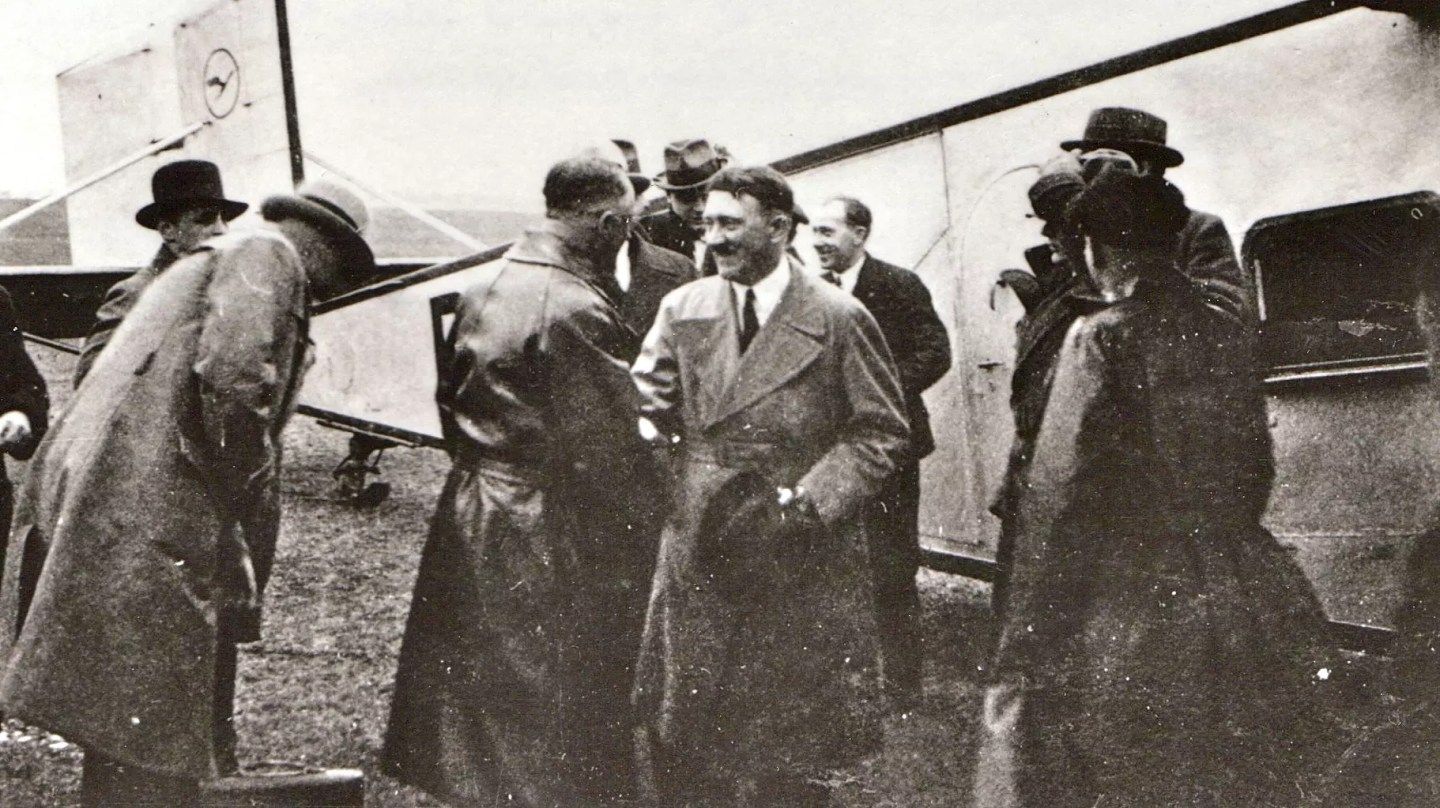
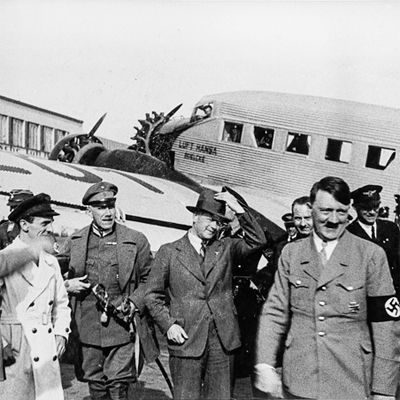
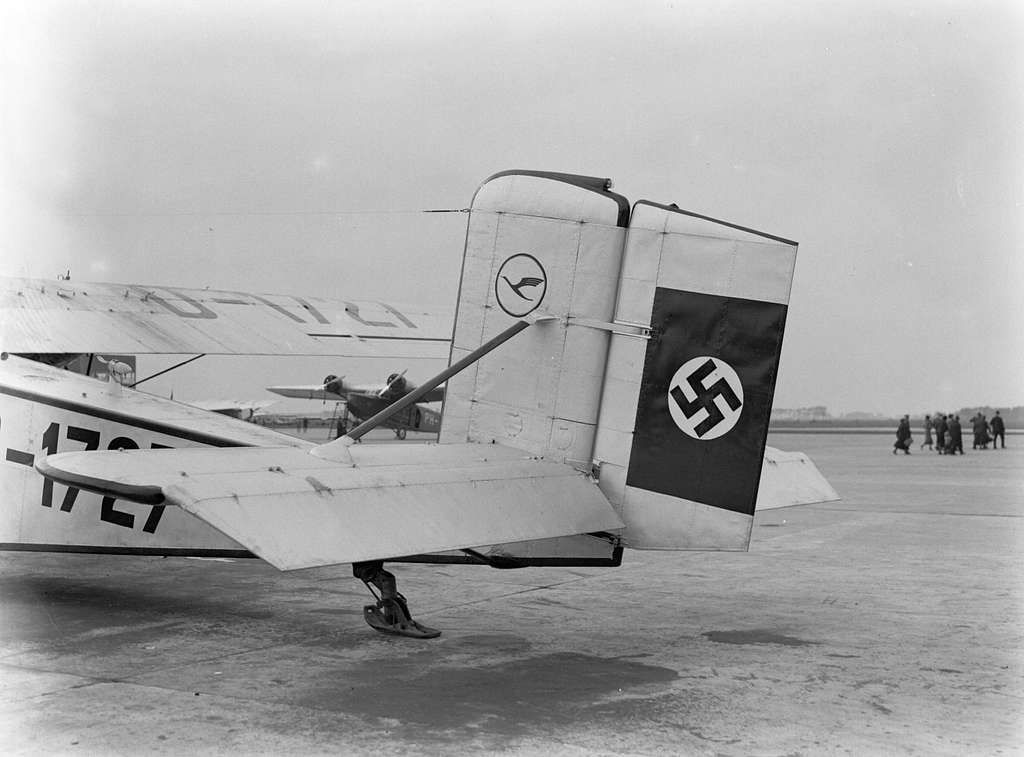
In the not-too-distant past, Lufthansa was an arms supplier for another regime.
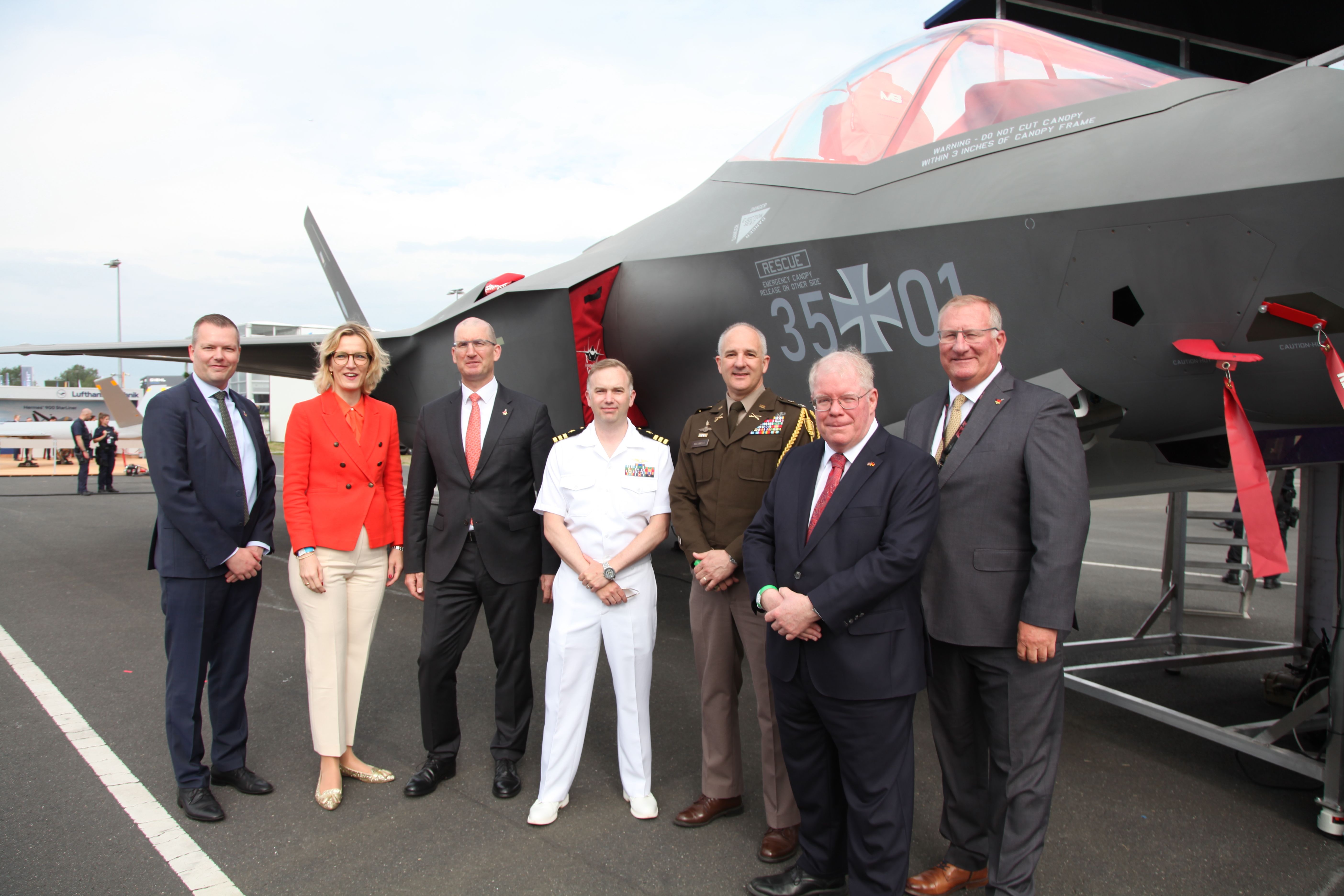
German officials with an Lockheed Martin F-35 Lightning II mock-up, at the 2024 ILA Berlin Air Show on 5 June 2024
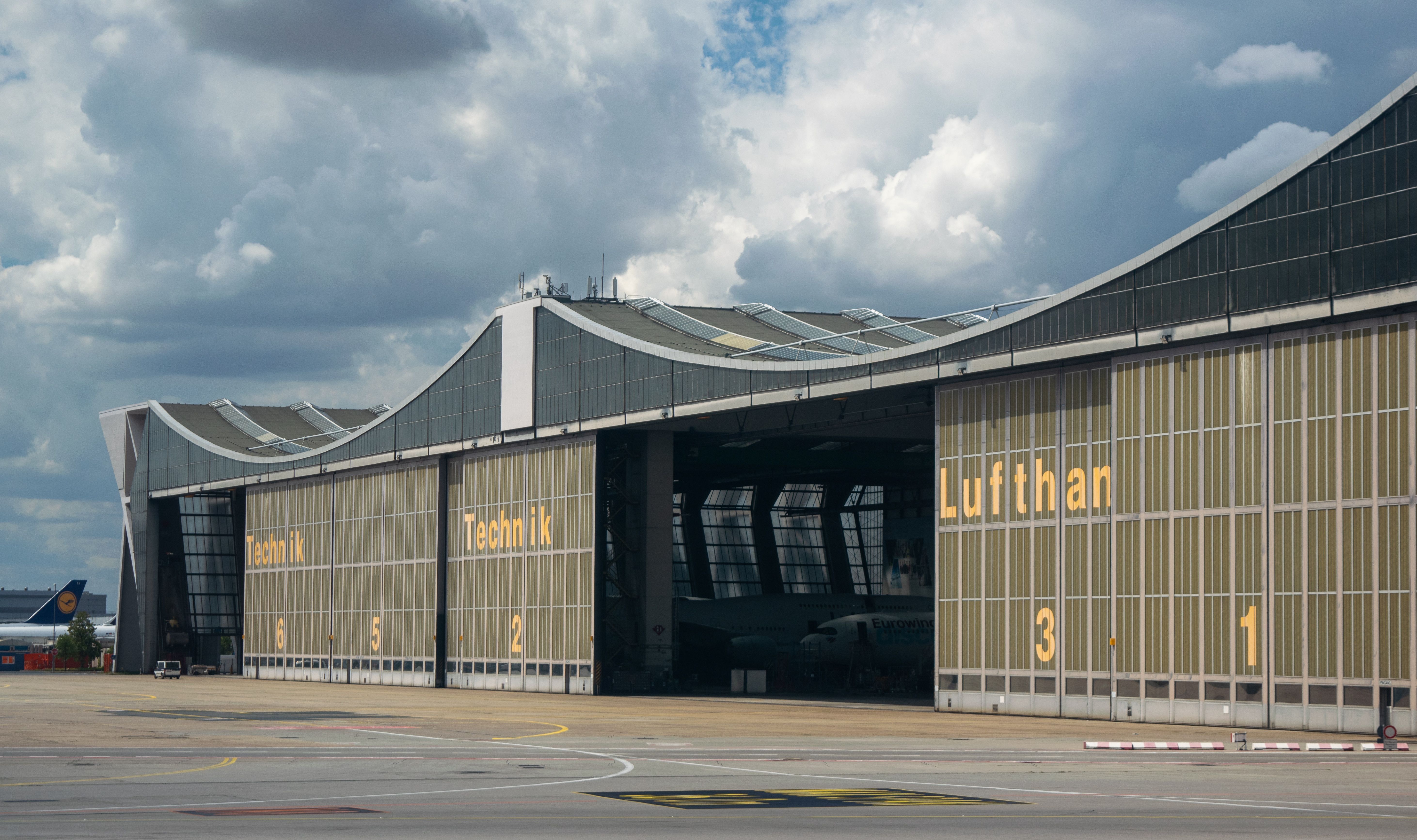
Lufthansa Technik's has become increasingly central to servicing new military defense contracts for the German Armed Forces.