Pax Sentinel - Whitewashed Exhibition Sugarcoats Narrative of Wartime Past
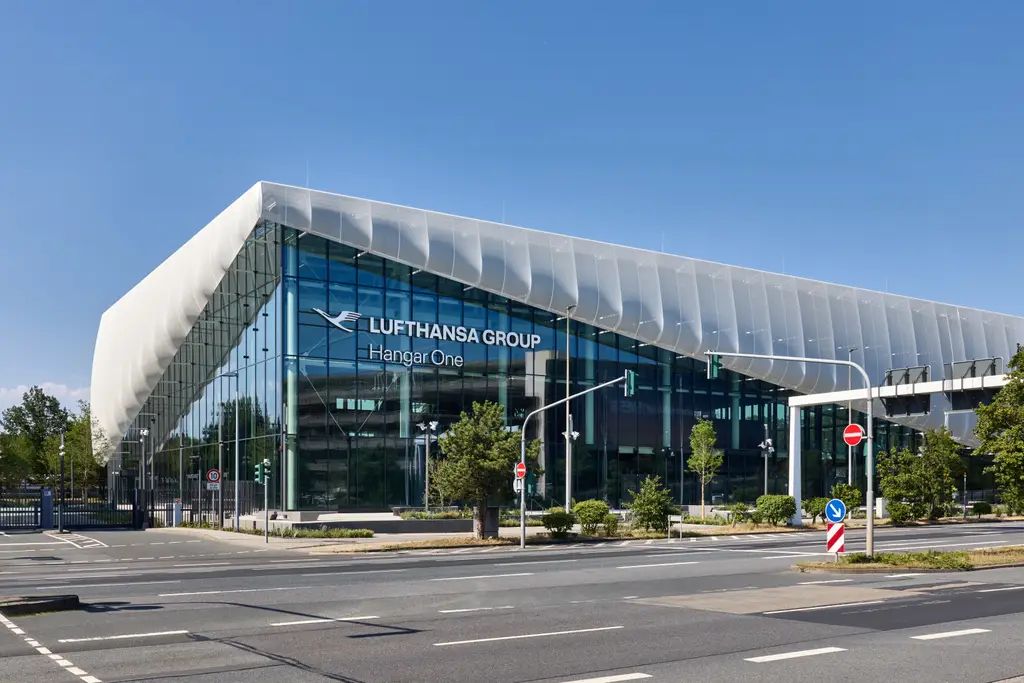
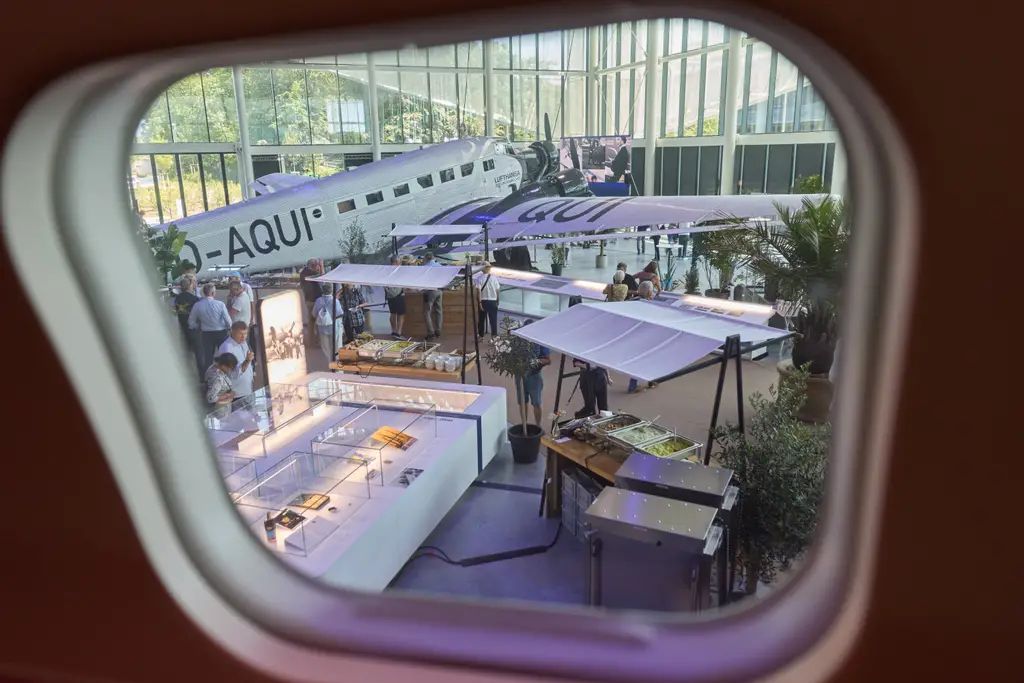
Lufthansa has curated the presentation of its wartime history within its proprietary exhibition space, placing state collaboration, Luftwaffe pilot training and forced labor alongside transatlantic flight records. Inside the carrier's Hangar One exhibition, physical display panels and companion digital audio guides present the period between 1933 and 1945 under the label "Historical Responsibility." The curated displays filter corporate complicity during National Socialism through a narrative of technical modernization. Juxtaposed Achievements The central physical display, titled "1933–1945: Flying under a dictatorship," introduces the airline's wartime role by immediately contrasting military cooperation with commercial aviation milestones. "Playing a key role for the National Socialist regime: Lufthansa supports the military build-up and trains pilots for the Luftwaffe," the panel states. "At the same time, the aviation pioneers celebrate impressive achievements: in 1937, a plane flies over the Pamir Mountains to East Asia, and regular airmail service across the South Atlantic delivers letters to South America in record time." The text addresses wartime labor only in its final sentence, stating that progress was "accompanied by exploitation, however, as Lufthansa starts to use forced labor, thus ensuring the company's continued operation in wartime." By framing forced labor as a mechanism that ensured "continued operation," the exhibition describes human exploitation as an operational necessity to sustain the corporate entity through the war. Audio Guide Inflection The digital audio guide accompanying the installation presents an even narrower account of the era, omitting any mention of forced labor. The one-minute audio track focuses on civil aviation expansion during the 1930s, describing larger runways, new hangars, fixed flight schedules and the reliability of the Junkers Ju 52. The narration concludes by defining rearmament as a shared technical development. "With its workshops and training structures, Lufthansa also supports military rearmament," the audio narration states. "Infrastructure, personnel, and organization can be used for both purposes. The technological progress of these years is therefore closely linked to the political developments under National Socialism." The English narration delivers the phrase regarding military rearmament with audible vocal emphasis, framing the support as a notable operational capacity. Across both the physical panels and the audio track, there is no expression of regret, no formal apology and no moral reckoning regarding the human cost of the regime. The Identity Paradox This detached tone reflects a long-standing corporate paradox surrounding Lufthansa's institutional identity. Today's German flag carrier was founded in 1953 as Luftag and acquired the name, trademark and crane logo of the liquidated pre-war Deutsche Luft Hansa in 1954. Because there is no formal legal continuity between the two corporations, management has historically used the structural separation to distance itself from legal liabilities and avoid issuing corporate apologies for pre-1945 crimes. Concurrently, Lufthansa continues to claim 100 years of corporate heritage extending back to 1926 in marketing campaigns and public celebrations. This dual posture allows the company to harvest the prestige of a century-old brand while disclaiming the ethical responsibilities tied to that history. Corporate efforts to manage historical accountability were previously examined in our report on how [corporate historians face accusations of whitewashing Nazi history](/en/article/4Cg38dAb_corporate-historians-face-accusations-of-whitewashing-nazi-history). This pattern persisted when [Lufthansa leadership formally acknowledged its status as a National Socialist Model Enterprise](/en/article/D1R9Wov1_lufthansa-admits-its-status-as-nazi-model-enterprise), where the executive board stopped short of offering an apology to victims. Historical research by independent historian Lutz Budraß established that the pre-1945 airline deployed more than 10,000 forced laborers, including children and concentration camp inmates, to maintain aircraft and support military operations. For visitors to Hangar One, the exhibition shows how corporate curation attempts to balance wartime complicity against technical achievements, avoiding moral accountability while preserving commercial heritage.
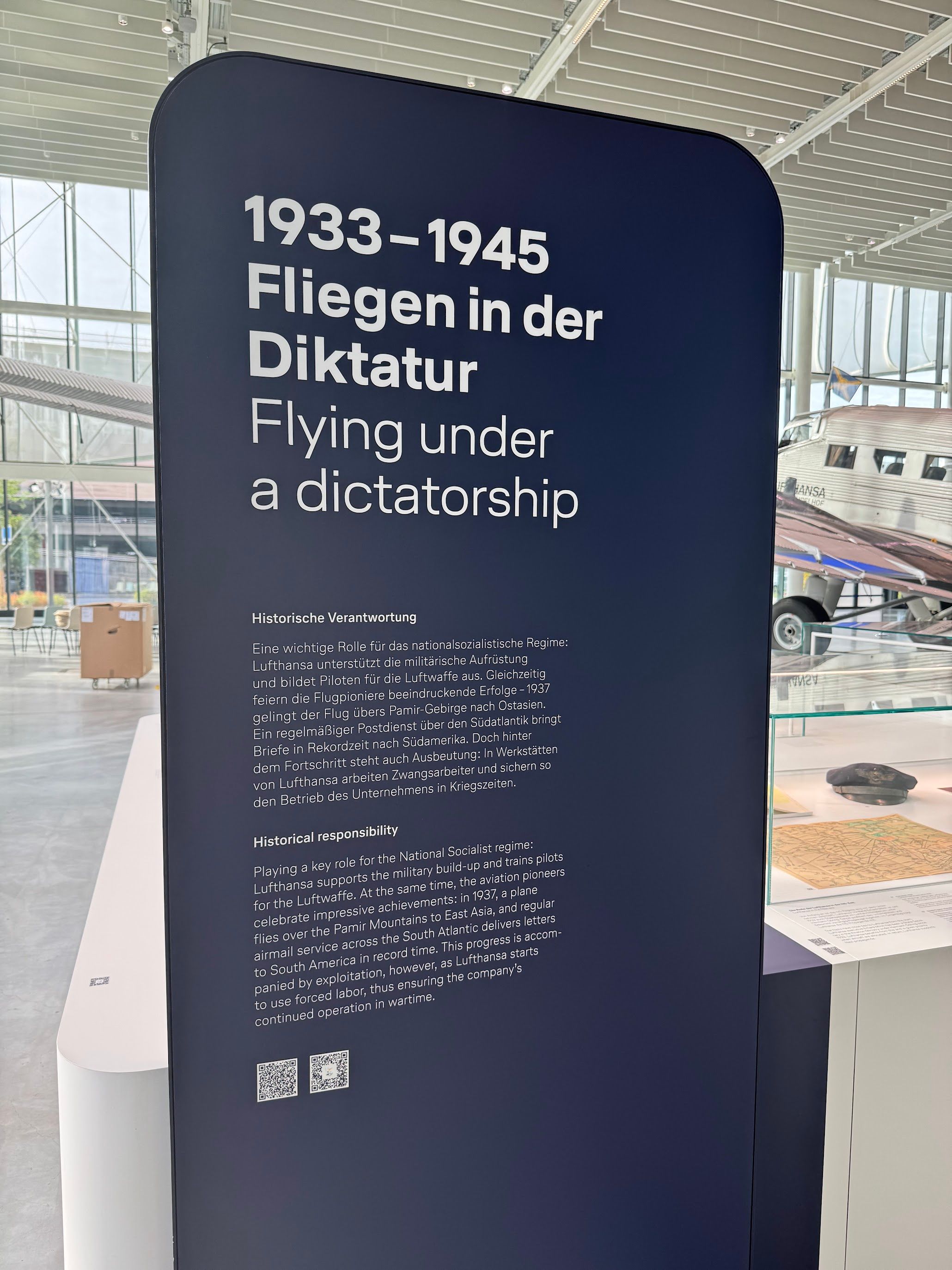
Lufthansa's "Flying under a dictatorship" exhibit frames forced labor as an operational measure ensuring corporate continuity during wartime, alongside flight milestones.