Pax Sentinel - Accident Report Confirms Deformed Airframe and Underreported Injuries
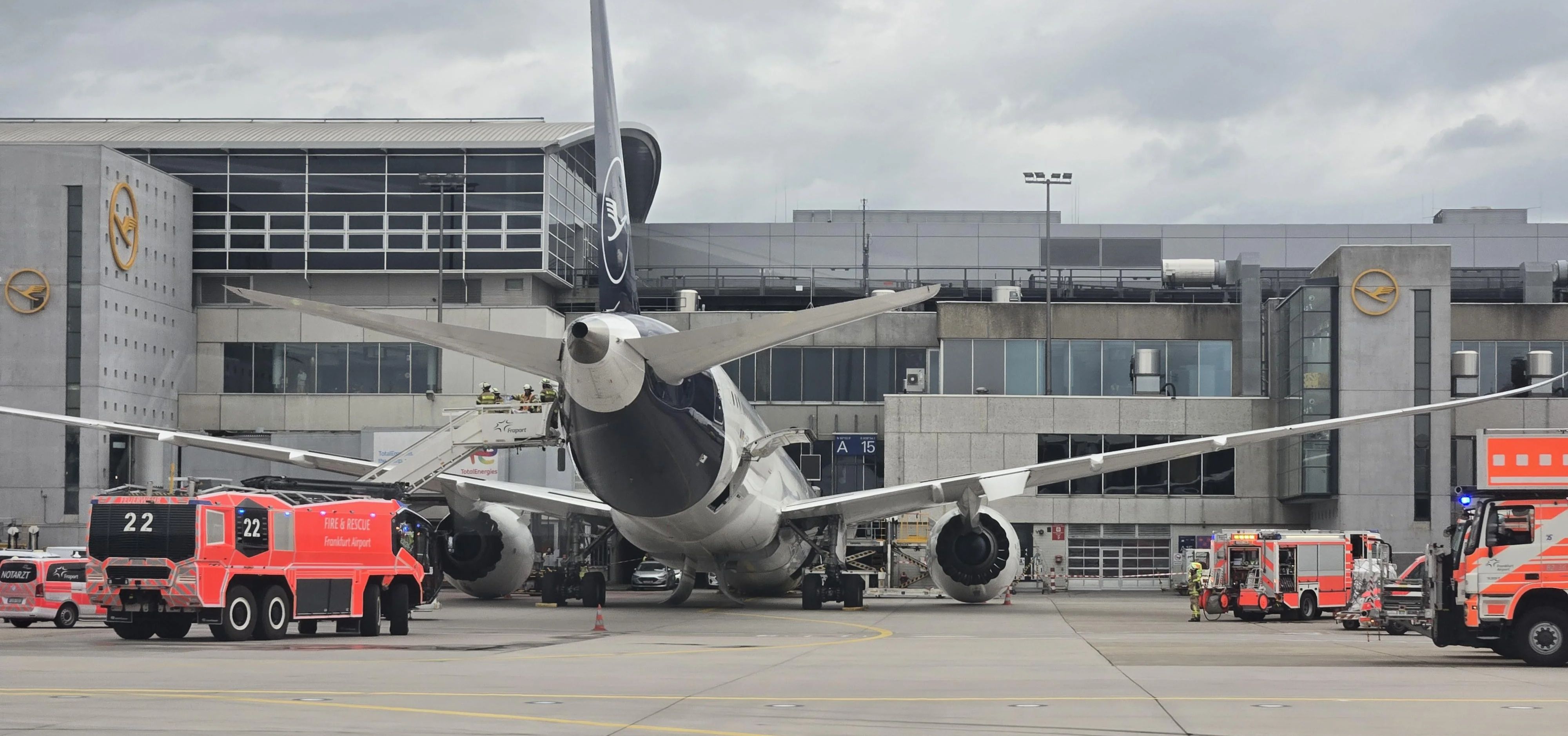
Germany’s Federal Bureau of Aircraft Accident Investigation (BFU) has published its interim report on the nose gear collapse of a Lufthansa Boeing 787-9 at Frankfurt Airport. The findings show that structural deformation and electrical failures complicated rescue efforts. The document details how the sudden loss of power and physical warping of the fuselage trapped crew members inside the aircraft. The accident, which occurred on June 4, 2026, involved a brand-new aircraft registered as D-ABPQ. While Lufthansa’s initial public statements listed only five minor injuries, the federal report recorded 23 casualties, including two serious injuries and 21 minor injuries. This discrepancy indicates a deliberate corporate effort to shield the carrier from negative publicity in the immediate aftermath of the incident. At the time of the collapse, 28 personnel were inside the cabin and six were on the ground at gate A15 of Terminal 1. No passengers had boarded the aircraft, which was being prepared for flight LH450 to Los Angeles. According to investigators, the nose landing gear retracted during an active cockpit diagnostic test because technicians failed to insert the mandatory safety downlock pin. The pin, marked with its red warning flag, was later found undisturbed inside a storage box in the avionics compartment. The retraction caused the forward section of the 180-ton widebody aircraft to drop nearly two meters before slamming onto the concrete apron. The sudden impact generated massive physical forces throughout the forward fuselage. The force of the impact caused the cockpit door to slam shut. Simultaneously, the main electrical power failed, extinguishing all cabin lights and leaving the personnel inside in complete darkness. Because the entire fuselage experienced severe structural deformation, the cockpit frame warped. This mechanical distortion jammed the cockpit door mechanism, confining the technicians on the dark flight deck during the immediate aftermath of the collapse. Ground crew members on the apron were also endangered. The plunging nose of the Dreamliner pinned a cargo high loader directly beneath the right forward cargo door of the fuselage, damaging the loader and injuring its operator, who narrowly escaped death. The worker operating the high loader was trapped as the metal framework of the aircraft's forward cargo section compressed the vehicle's operator cabin. The BFU recorded extensive damage to the aircraft’s carbon-fiber-reinforced plastic hull. The impact forced the landing gear doors outward, completely deforming them and tearing them from their metal hinges. Structural Damage The load-bearing bulkheads and the inner landing gear mounting points within the fuselage suffered severe deformation. Both Rolls-Royce Trent 1000 engine cowlings also made direct contact with the tarmac, suggesting widespread mechanical stress. Lufthansa representatives said in July 2026 that no reliable assessment is yet available regarding whether a repair is technically feasible or economically viable. The repair of composite hulls is notoriously complex. Unlike traditional aluminum aircraft, where damaged sections can be easily riveted and replaced, composite carbon structures require laser-guided scans to detect microscopic delamination. If the internal layers of the carbon weave have separated, the structural integrity of the pressurized cabin is lost. If the forward cargo bay framework is deformed beyond standard tolerances, the entire front section of the aircraft must be cut out and replaced. Such an overhaul requires individual engineering approval from Boeing and would take several months. This prolonged grounding removes one of the carrier's newest widebody aircraft from service. D-ABPQ had only been delivered in January 2026 and had operated commercial flights for less than four months before the collapse. Chronology of Safety Lapses A Pax Sentinel investigation shows that the underreporting of injuries in the Frankfurt ground collapse is part of a broader pattern of minimizing operational failures to protect financial yields. The group consistently downplays safety risks to avoid regulatory scrutiny and mandatory maintenance groundings. The BFU's confirmation of 23 casualties (rather than the five light injuries reported by Lufthansa) reveals how close the incident came to a fatal outcome. The worker operating the cargo loader vehicle beneath the nose cargo door was nearly crushed as the aircraft's heavy frame collapsed onto the vehicle's cabin. These physical risks are compiled in Table 1 below, which documents recent safety incidents where lax protocols and equipment failures were met with corporate minimization. | Date & Flight / Aircraft | Event | Crew Action | Corporate Response | | --- | --- | --- | --- | | Feb 22, 2018 LH401 / Boeing 747-8 | Inflight engine shutdown | Declined emergency declaration; requested priority handling | Bypassed mandatory reporting rules; avoided immediate safety review | | Jan 21, 2024 LH964 / Airbus A320neo | Inflight smoky smell in cabin | Declined emergency declaration; diverted normally to Amsterdam | Described as "unusual smell"; returned to service within 24 hours | | Dec 23, 2024 LX1885 / Airbus A220-300 | Engine failure and cabin smoke | Utilized defective Collins breathing mask; failed exit doors | Declined to comment; suggested the crew member was at fault | | May 12, 2025 LH405 / Airbus A340-300 | Inflight engine failure and fuel dump | Declined emergency declaration; cited technical reasons | Bypassed mandatory reporting; avoided safety grounding | | Jun 4, 2026 LH450 / Boeing 787-9 | Nose landing gear collapse at gate | Omitted mandatory safety downlock pin during test sequence | Reported 5 minor injuries; BFU recorded 23 casualties and deformed hull | Table 1: Documented safety incidents and corporate responses This table illustrates the ongoing tension between operational speed and passenger safety. In several cases, pilots declined to use standard emergency phrasing such as "Mayday" or "Pan-Pan" after severe failures. Avoiding a formal declaration allows the carrier to bypass federal reporting rules. These rules require immediate ground inspections and can result in the temporary grounding of aircraft, which directly impacts the group's earnings per aircraft. When safety-critical equipment fails, the group's public relations apparatus works to redirect blame. Following the tragic death of the SWISS flight attendant on Flight LX1885, management declined to address the known defects of the Collins Personal Breathing Equipment. Instead, the airline suggested that the flight attendant was at fault for his own actions during the emergency. This defense allowed the carrier to shield its brand from liability and avoid grounding flights to replace the masks. Similarly, when crew members reported smoke on Flight LH964, the pilots acted carelessly by continuing a standard diversion to Amsterdam without declaring an emergency. The carrier then downplayed the incident as an "unusual smell" to avoid ground checks. Public Relations Management The discrepancy between Lufthansa’s initial reporting of five minor injuries and the official tally of 23 casualties reveals a corporate pattern of downplaying operational failures. Rather than addressing procedural flaws, the group repeatedly prioritizes media control over transparency. This strategy of active damage control serves to minimize the impact on stock valuation and maintain public confidence in the face of negligence. This pattern is also evident in the group's response to other severe safety incidents. During a fatal cabin smoke emergency on Swiss International Air Lines Flight LX1885 in December 2024, a 23-year-old flight attendant died of hypoxic brain damage. The death was linked to defective Personal Breathing Equipment hoods manufactured by Collins Aerospace. SWISS and its parent Lufthansa Group had known of the defects since October 2023 but delayed the replacement of the safety equipment to avoid fleet groundings. Following the tragedy, Lufthansa Group executives declined to issue official statements addressing the equipment defects. Instead, internal communications from the carrier suggested that the flight attendant was at fault for her own actions during the evacuation. Safety investigators and independent observers noted that the corporate response focused on protecting the brand’s premium market positioning. By attributing the fatality to individual actions rather than equipment failures, the company avoided costly liability claims. Similarly, the group has consistently minimized inflight smoke incidents to avoid regulatory scrutiny and mandatory maintenance checks. In January 2024, the pilots of Lufthansa Flight LH964 detected a smoky smell over the North Sea on an Airbus A320neo. The flight, which carried 84 passengers and six crew members, was forced to divert but did not utilize priority landing vectors. Rather than declaring a formal emergency, which would require immediate landing priority and subsequent federal reporting, the flight crew chose to divert normally to Amsterdam Schiphol Airport. The carrier subsequently told the media that only an "unusual smell" had occurred. This selective terminology allowed the airline to bypass mandatory ground inspections and quickly return the aircraft to revenue-generating service the following day. Operational Risk Calculations Safety advocates warn that treating inflight smoke as a minor precautionary issue to protect flight schedules poses severe risks. Historically, treating smoke as a non-emergency was a contributing factor to disasters like the 1998 Swissair Flight 111 crash. The ongoing failures align with a broader operational model implemented under Chief Executive Officer Carsten Spohr. A midyear review of how [Mr. Spohr prioritizes profit margins over operational reliability](/en/article/RLdAb1kG_midyear-performance-review-carsten-spohr-prioritizes-margin-over-mission) shows that squeezing maintenance timelines leads directly to ground accidents. Managing a highly fragmented widebody fleet under strict ground turnarounds reduces the operational buffer for ground crews. This pressure was documented when [lax ground protocols and checklist failures triggered a nose gear collapse](/en/article/9yxzInST_lax-ground-protocols-trigger-dreamliner-nose-gear-collapse) on the brand-new Boeing 787-9. To maintain profitability, the group continues to bypass rigorous labor safety demands. Legally, the carrier exploits regulatory loopholes, a practice that has prompted [unions to expose the abuse of flight safety limits](/en/article/phdfMDvD_aviation-unions-expose-abuse-of-flight-safety-limits) that forces crews to work through severe fatigue. While the group implements aggressive revenue-generating measures, such as [the elimination of free long-haul seat changes](/en/article/eilwAR3S_lufthansa-group-eliminates-free-long-haul-seat-changes), it resists investing in expensive process reforms or safety equipment. The corporate calculation assumes that the financial consequences of sporadic accidents are cheaper than the costs of slower, safer operations.
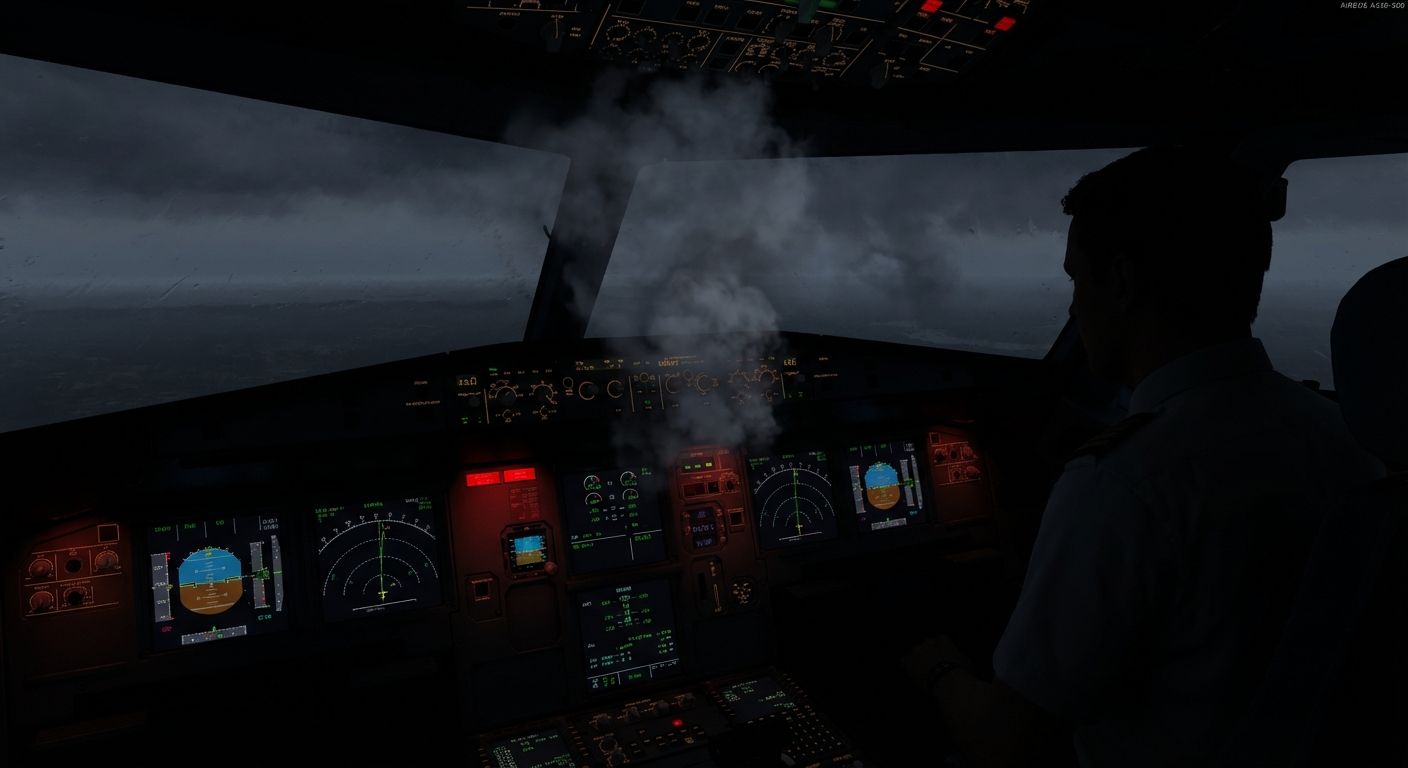
Despite smoke in the cockpit of LH964, pilots focused on logistics to keep the aircraft in service. An eerily similar incident brought down Swissair Flight 111 in 1998.
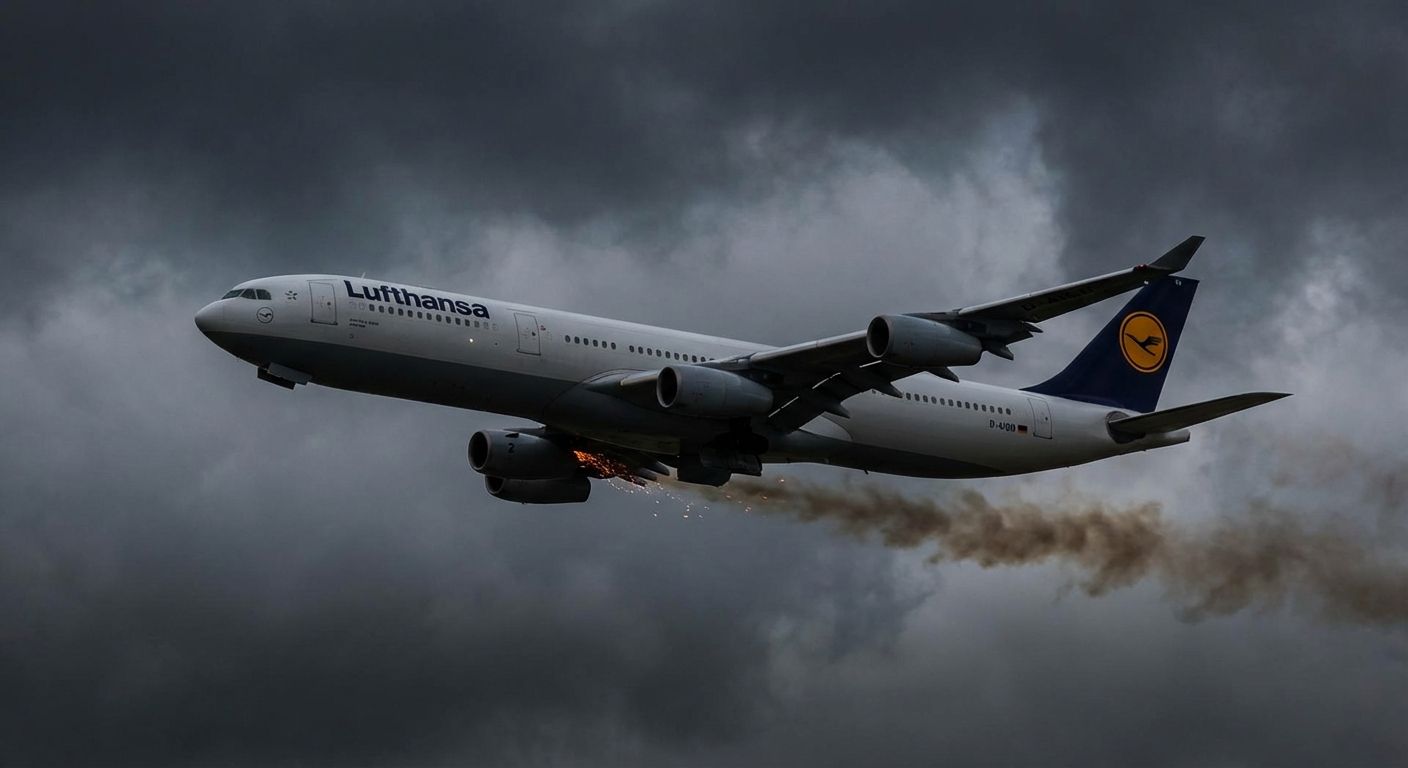
A Lufthansa A340 experiences engine failure, an incident the airline downplayed to avoid grounding.
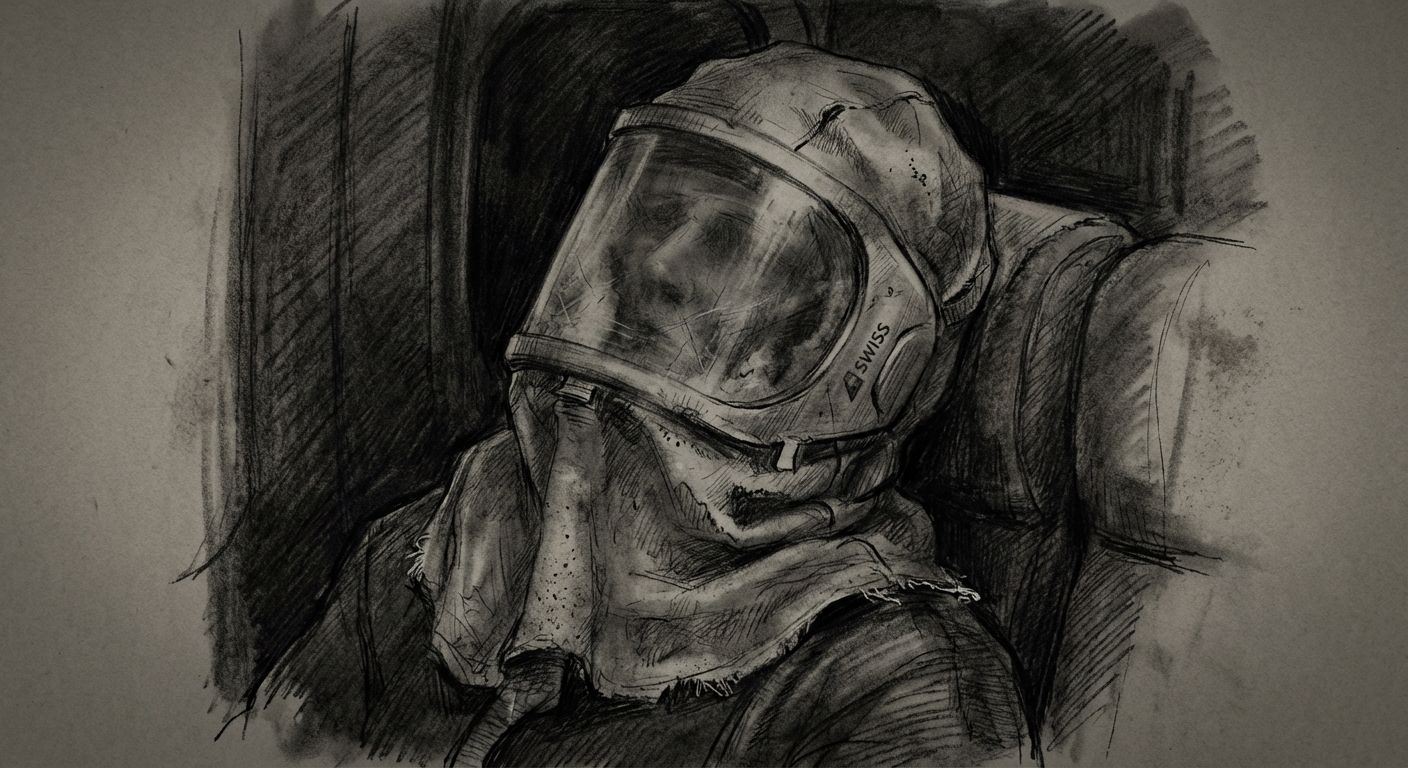
Defective PBE hoods caused the tragic death of a crew member on board SWISS LX1885.