Pax Sentinel - Nose Gear Collapse Damages Brand-New Dreamliner

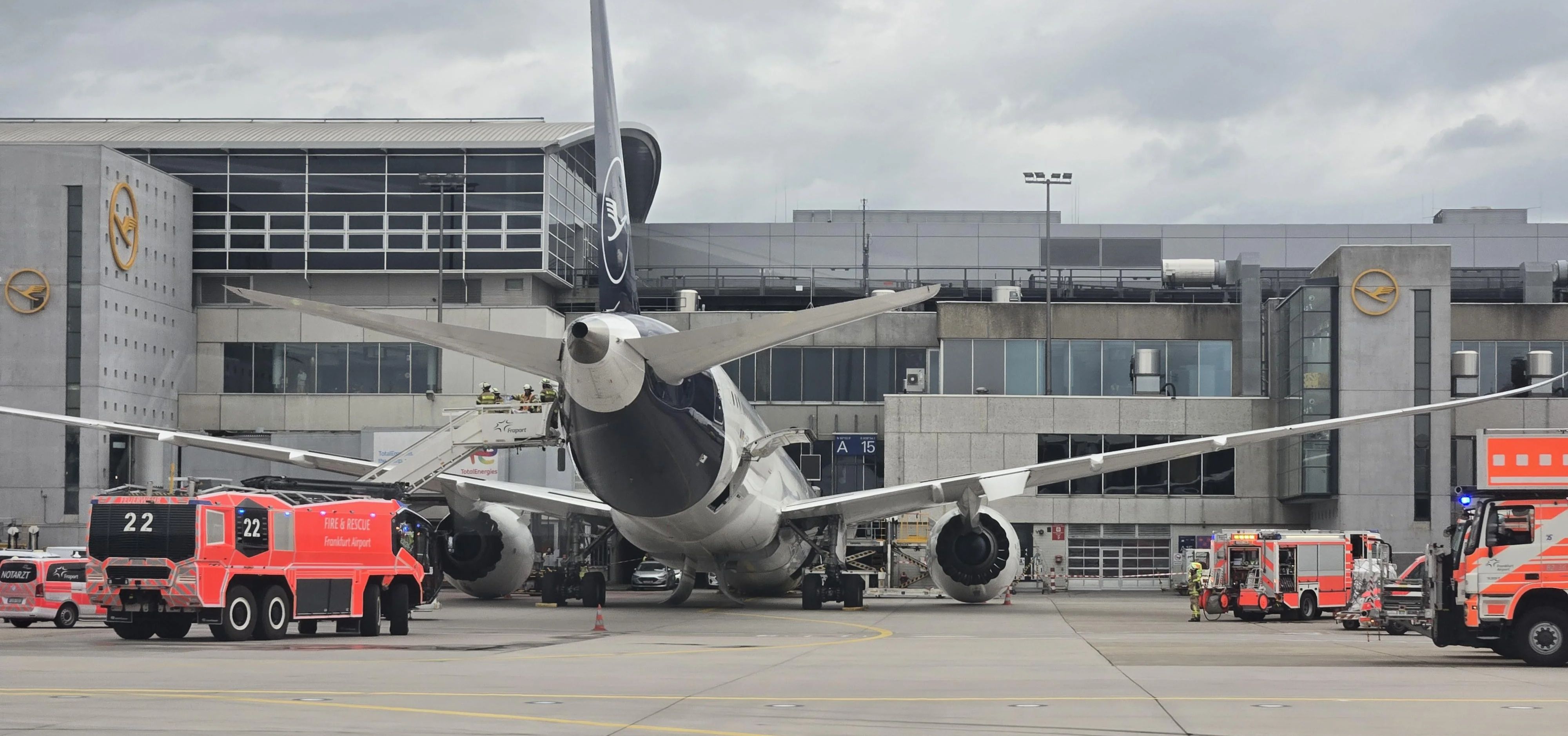
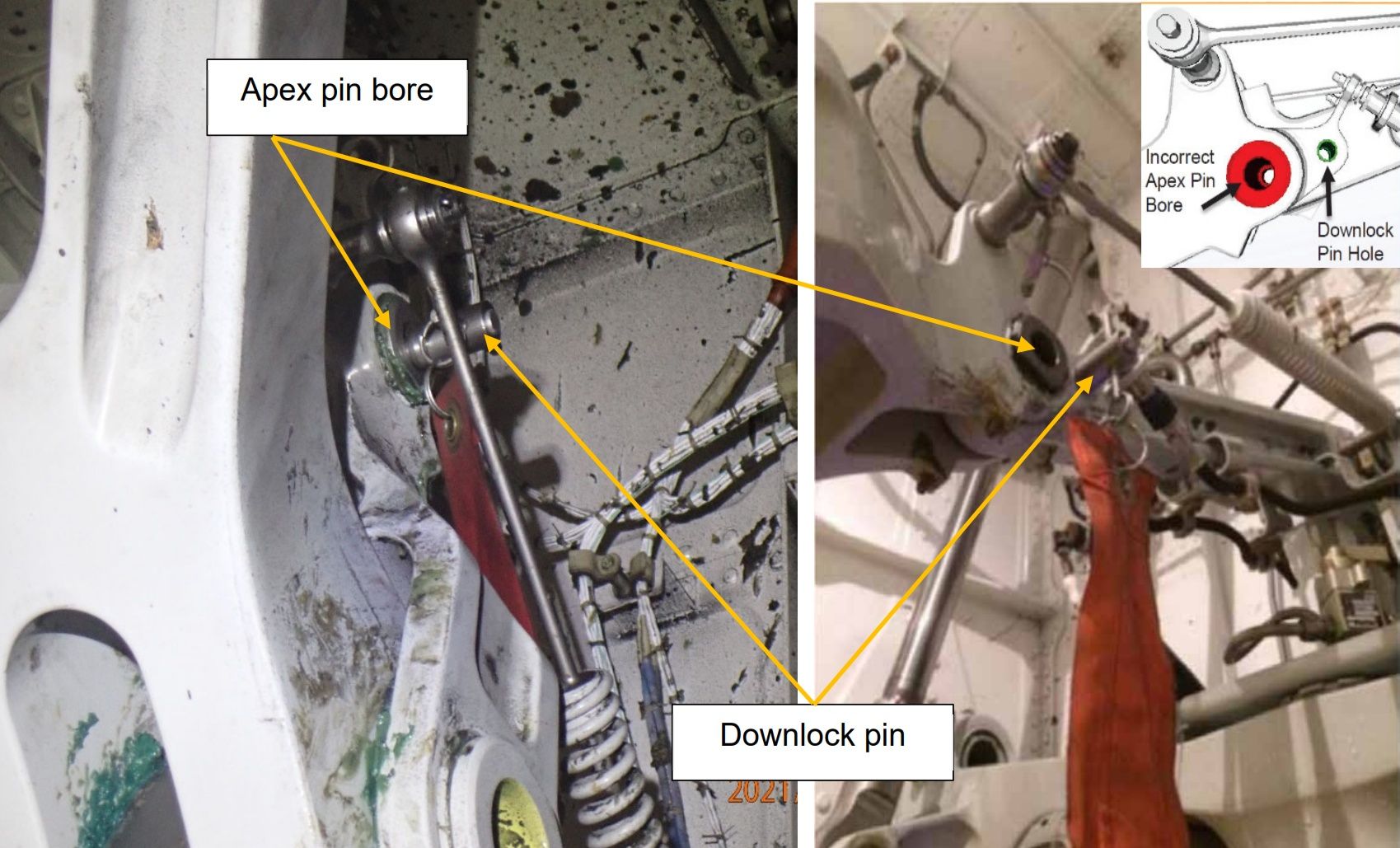
The nose landing gear of a recently delivered Lufthansa Boeing 787-9 Dreamliner collapsed on Thursday, June 4, 2026, while the aircraft was parked at a boarding gate at Frankfurt Airport, forcing the immediate cancellation of a transatlantic flight to Los Angeles. The aircraft, registered as D-ABPQ and named "Herne", suffered the structural failure at approximately 12:45 p.m. local time as ground crews prepared the twin-engine jet for flight LH450. No passengers were on board at the time of the collapse, and airport authorities reported that two crew members sustained minor injuries. The widebody jet was delivered to the German carrier on January 17, 2026. It officially entered commercial passenger service on February 13, 2026, meaning the airframe had been in active operation for less than four months when the collapse occurred. Manufacturer records show the aircraft, listed under manufacturer serial number 66827 and line number 1196, was assembled at the Boeing facility in Charleston, South Carolina. The aircraft completed its first test flight in April 2025, meaning the physical airframe was approximately 14 months old at the time of the failure. The grounding of the new aircraft exposes the operational risks of Lufthansa’s highly fragmented widebody fleet. This event occurs as the airline enforces aggressive cost-cutting measures that directly impact the passenger experience, showing a lack of strategic planning and logistics optimization. The Frankfurt Incident On-site photographs and airport surveillance videos show the aircraft resting nose-down on the apron, with the tail assembly tilted upward. The force of the collapse pushed the forward nose gear doors outward and caused the lower fuselage to strike the concrete surface of the stand. The impact also caused the under-wing engine nacelles to make contact with the ground, suggesting that the aircraft sustained extensive structural and mechanical damage. Ground personnel and emergency crews responded to the gate to stabilize the aircraft and prepare for defueling operations. The aircraft had completed flight LH469 from Austin, Texas, earlier in the morning and was scheduled to depart for Los Angeles International Airport. Following the incident, Lufthansa canceled flight LH450, leaving hundreds of travelers to seek alternative arrangements through the airline's passenger service channels. A Design Vulnerability The sudden collapse of a nearly new widebody aircraft raises questions about fleet maintenance and quality control. Lufthansa has established an internal team to investigate whether the failure was caused by a mechanical defect, maintenance activities or human error by the ground crew. Aviation safety databases record similar ground-based nose gear collapses on the Boeing 787 platform. On June 18, 2021, a British Airways Boeing 787-8, registered as G-ZBJB, experienced an identical nose gear retraction while parked on a stand at London Heathrow Airport during preparation for a cargo flight. In that incident, the Air Accidents Investigation Branch (AAIB) found that the ground maintenance team was working to address three fault messages associated with the nose landing gear doors. To prevent retraction, the team fitted landing gear downlock pins, but when the cockpit crew selected the landing gear lever to the "UP" position, the nose gear retracted. The AAIB investigation concluded that the downlock pin was inadvertently inserted into the downlock link assembly apex pin instead of the actual downlock pin hole. The [AAIB Special Bulletin S1/2021](https://www.gov.uk/aaib-reports/aaib-special-bulletin-s1-slash-2021-on-boeing-787-8-g-zbjb) showed that the design of the aircraft's assembly created an opportunity for error because the two holes were located close together. To mitigate this known hazard, the United States Federal Aviation Administration (FAA) had issued Airworthiness Directive 2019-23-07, under Docket No. FAA-2019-0494. This formal directive, adopted under [EASA AD US-2019-23-07](https://ad.easa.europa.eu/ad/US-2019-23-07), required operators to install a physical insert inside the apex pin inner bore to block incorrect downlock pin placement. While G-ZBJB was operating within a 36-month compliance window and had not yet received this modification at the time of its 2021 collapse, the same justification cannot be applied to Lufthansa's D-ABPQ. As an aircraft assembled in 2025 and delivered in 2026—years after the compliance deadline had passed—the twin-engine jet should have had the safety modification integrated at the factory. Unresolved Safety Questions Germany's Federal Bureau of Aircraft Accident Investigation (BFU) is investigating why this known vulnerability was not resolved on the newly manufactured airframe. Investigative specialists have identified two primary scenarios to explain why the safety modification did not prevent the retraction of D-ABPQ's nose landing gear. The first possibility is a failure in manufacturing quality control. The aircraft was built at the [Boeing South Carolina facility](https://en.wikipedia.org/wiki/Boeing_South_Carolina), which has a documented history of quality control issues, including titanium defects, structural assembly errors and incomplete safety installations. If the manufacturing plant failed to install the mandated physical insert inside the apex pin inner bore, the downlock pin could still be placed in the wrong hole. The second possibility is a procedural failure by ground handlers during maintenance work. Community members on the Swiss aviation platform [Flightforum.ch](https://www.flightforum.ch/board/topic/123588-04062026-lufthansa-boeing-787-9-d-abpq-eddf-frankfurt-nose-gear-collapse-at-gate/) noted that during fault isolation tests on nose landing gear doors, ground crews must physically insert the safety pin. If technicians failed to insert the downlock pin at all prior to cycling cockpit controls, hydraulic power would retract the gear. Fleet Fragmentation Costs While investigators determine whether D-ABPQ suffered a similar maintenance error or a mechanical failure, the incident exposes the compounding costs of Lufthansa's diverse long-haul fleet. The airline continues to invest heavily in multiple overlapping aircraft types from different manufacturers. Lufthansa's widebody fleet includes a mix of Boeing 787-9, 747-8, 747-400 and delayed 777-9 aircraft, alongside Airbus A350-900, A350-1000, A380, A340-300, A340-600 and A330-300 models. This high level of fleet diversity increases maintenance complexity, spare parts logistics expenses and pilot training requirements. Industry analysts state that maintaining such a varied fleet drives up operational overhead and reduces scheduling flexibility when an aircraft is suddenly grounded. This lack of fleet and logistics optimization has left the carrier with thin operational margins. The grounding of D-ABPQ will likely exacerbate existing [scheduling failures that have grounded hundreds of flights](/en/article/sMJXUtBM_scheduling-failures-ground-hundreds-of-flights), showing how easily a single-aircraft disruption can ripple through the network. Passenger Austerity Measures The heavy capital expenditure required to maintain this complex fleet occurs while Lufthansa implements aggressive austerity measures targeting passenger service. The carrier has shifted the financial burden of its operational inefficiencies directly onto travelers. The airline group recently introduced [restrictive carry-on limits designed to extract fees](/en/article/hdG2FVC2_carry-on-limits-expose-aggressive-gate-cash-grab) and has standardized [gate-side baggage checks with higher fees](/en/article/PWXAO1UJ_swiss-confirms-gate-side-baggage-checks-with-higher-fees) to maximize ancillary revenue. Fares have been unbundled into basic tiers, forcing passengers to pay extra for standard amenities that were once included. While passengers face service reductions, Lufthansa's shareholders recently demanded the centralization of the group's brands to maximize short-term investor returns, a move detailed in our report on how [shareholders push Lufthansa to gut brands and consolidate the market](/en/article/dk17uGfM_shareholders-push-lufthansa-to-gut-brands-consolidate-market) for maximum profit, prioritizing investor returns over fleet modernization and operational reliability. Furthermore, the carrier is actively trying to insulate itself from the financial consequences of its operational disruptions. Lufthansa is currently [lobbying European Union regulators to reduce passenger compensation](/en/article/4SL2uE24_lufthansa-lobbies-to-reduce-eu-passenger-compensation), proposing longer delay thresholds and exemptions for disruptions caused by labor disputes.
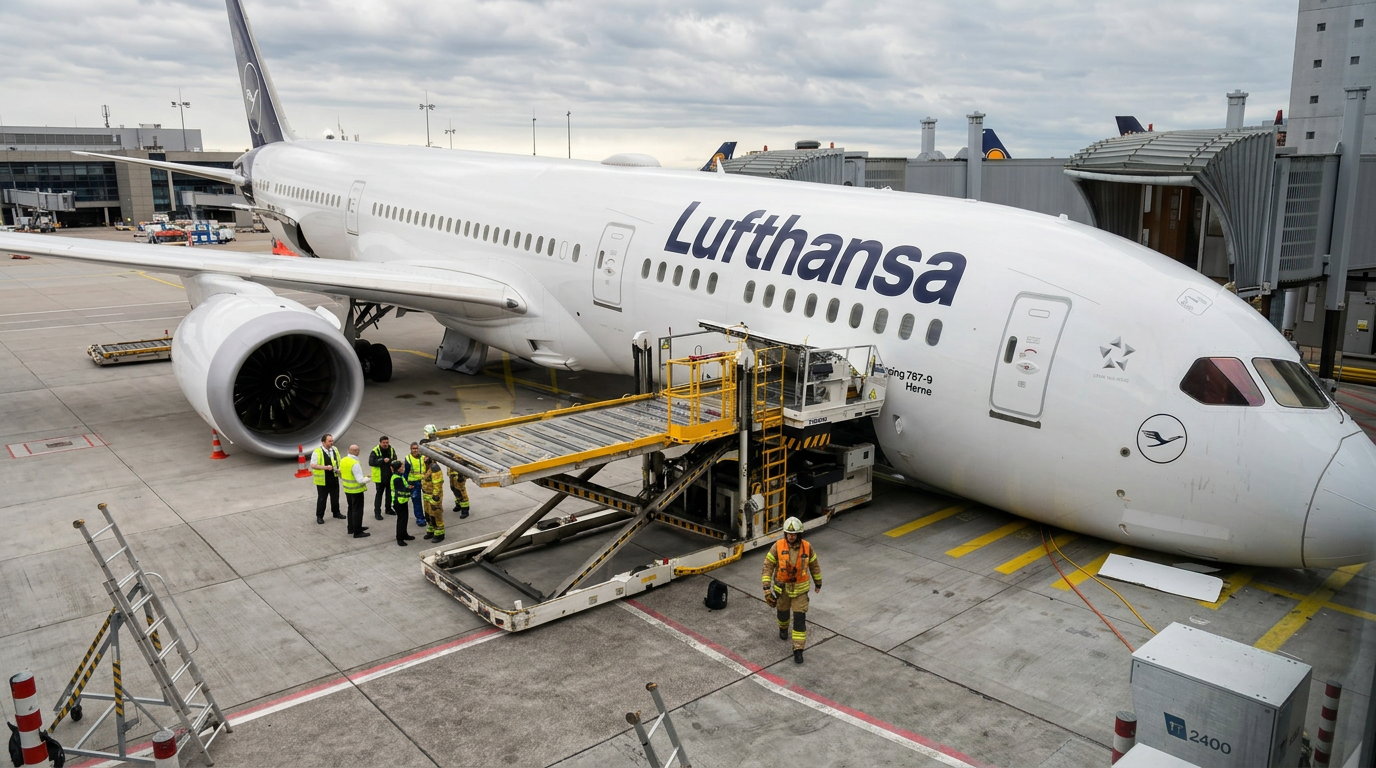
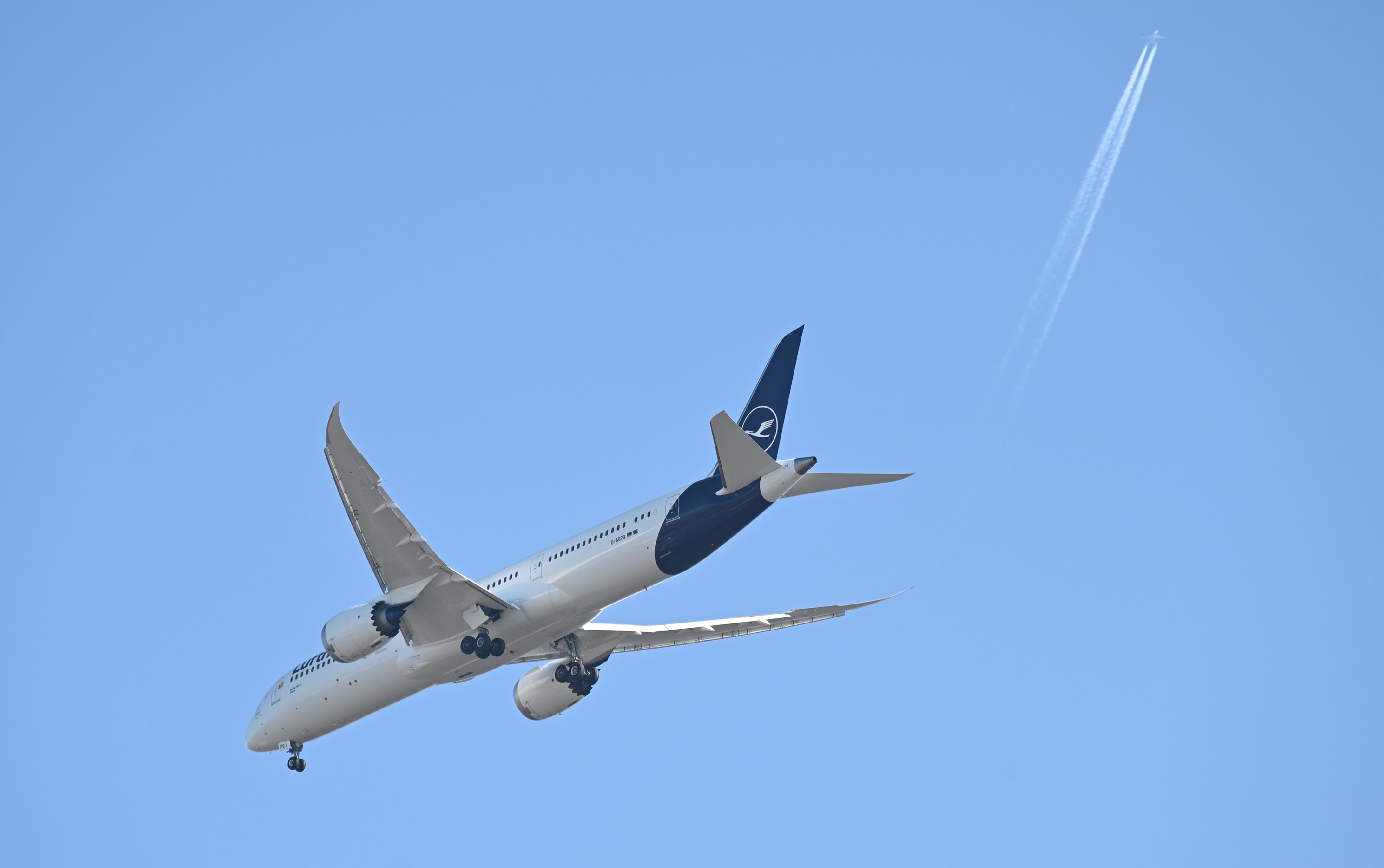
Lufthansa's brand-new 787-9 D-ABPQ, 'Herne', only entered service four months ago.
Engines of the grounded Lufthansa Dreamliner barely cleared the apron after its nose gear collapse.
Downlock pin incorrectly fitted to the apex pin bore (left) and an example of the correct location of the pin for comparison (right), from the AAIB investigation to Boeing 787-8, G-ZBJB